

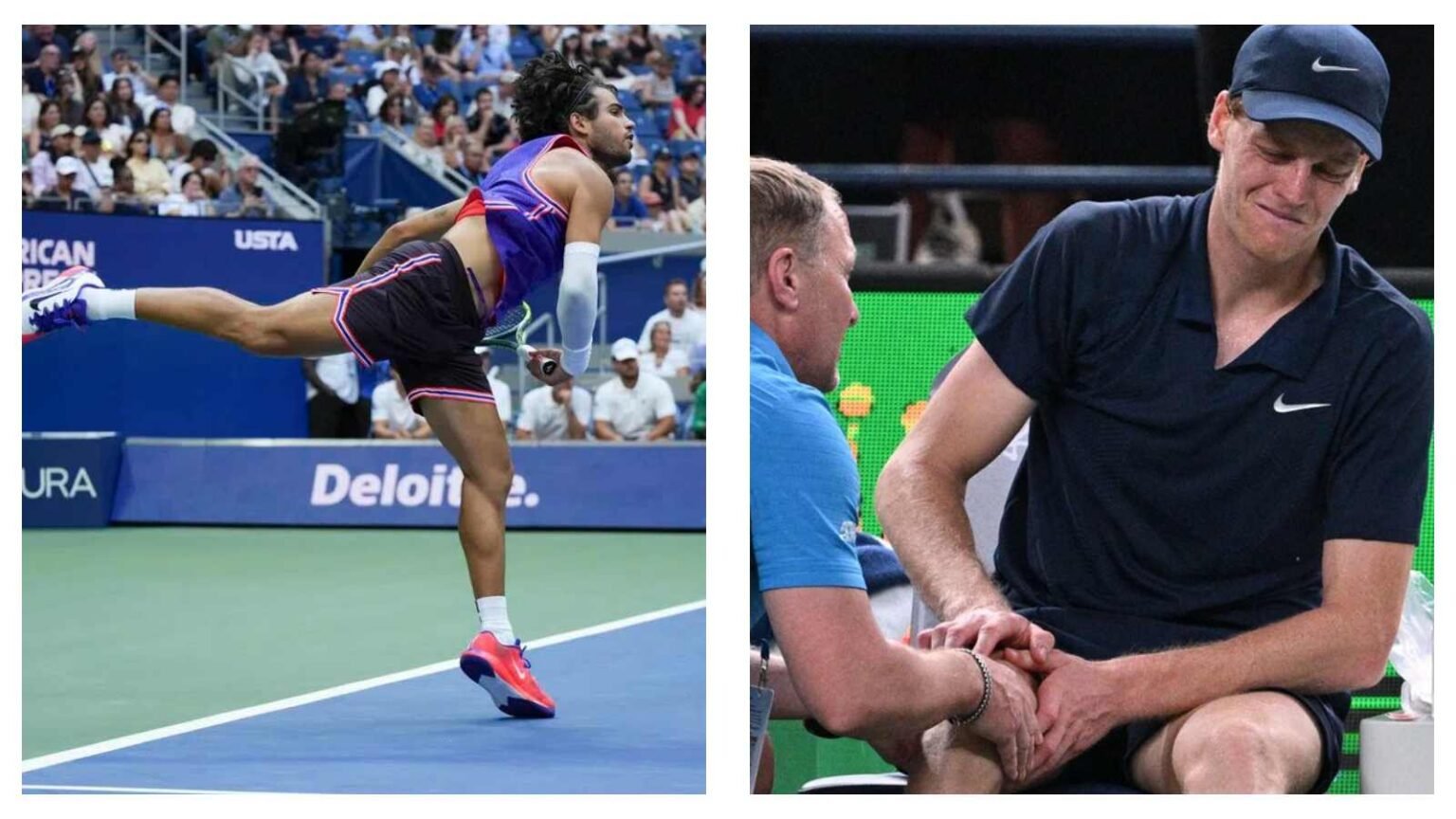
The highly anticipated 2026 rivalry between Carlos Alcaraz and Jannik Sinner has been disrupted by injuries.
Alcaraz will miss Roland Garros and Wimbledon because of a wrist injury. Sinner has also withdrawn from the United States Open with a knee problem.
The two stars were expected to dominate the season after sharing the Grand Slam titles in 2026. Their absences now highlight a wider concern about the physical demands of modern tennis.
Rising injury rates defy medical progress
Alcaraz and Sinner are not the only top players dealing with injuries.
Italy’s Lorenzo Musetti and France’s Arthur Fils have also missed major events. Elena Rybakina, the women’s world No. 2, entered the US Open with a heel injury.
Canada’s Victoria Mboko and Britain’s Jack Draper have also missed important tournaments because of physical problems.
Medical experts say the situation remains concerning despite major advances in sports medicine.
Elite players now have access to advanced training methods and injury-prevention programmes. They also benefit from improved medical technology and greater awareness of mental health.
However, those developments have not stopped injuries from affecting the sport’s biggest names.
“We’re losing the battle overall despite the advances in sports medicine,” said Dr. Neeru Jayanthi, who leads the sports medicine programme at Emory Healthcare in Atlanta, according to AFP.
The comments underline the scale of the tennis injury crisis facing professional players.

Multiple factors drive higher physical toll
Several factors may explain why modern tennis places such a heavy physical burden on players.
Experts point to the increased intensity of the modern game. Players are bigger, faster and stronger than many previous generations.
Modern rackets also allow players to generate more spin and power. At the same time, constant changes of direction place greater stress on the body.
Weather conditions can add another challenge. Extreme heat and other effects linked to climate change can make matches even more demanding.
“The game has gotten more intense because the players have gotten bigger, faster, and stronger,” said Mackie Shilstone, a veteran fitness expert who worked with Serena Williams for 14 years.
He also highlighted the length of the professional season.
The tennis calendar stretches across almost 11 months. Players must also travel around the world between tournaments.
“You can’t go 11 months straight and travel all over the world. There has to be planned recovery built in,” Shilstone said.
The combination of competition, travel and limited recovery time can increase the physical strain on players.

Rest and prevention become key strategies
Players are increasingly prioritising recovery as they try to protect their careers.
Remy Rabinovich, a surgeon at Northwestern Health, said extreme fatigue can influence players’ decisions to withdraw from tournaments.
“There is a big element of preventative medicine and more strategic ways of playing in the hopes of having a longer career,” he said.
The approach reflects a wider change in professional tennis. Players and their teams now place greater emphasis on preventing injuries rather than simply treating them after they occur.
Several tennis legends also experienced serious physical problems during the later stages of their careers.
Novak Djokovic, Rafael Nadal, Roger Federer and Andy Murray all dealt with significant injuries. Murray eventually retired from professional tennis after years of physical problems.
His long career showed how difficult it can be for elite players to maintain their bodies at the highest level for many years.
Special council formed to address crisis
The Grand Slam Player Advisory Council will examine issues affecting player health and workload.
Dr. Jayanthi has also called for changes to youth development programmes. He believes training methods should focus more strongly on long-term player health.
“Perhaps we should revisit the way we decide to train our younger players to position them for long-term success,” he said.
The debate could lead to further changes in how tennis manages player workloads, recovery and injury prevention.
For now, the absences of Alcaraz and Sinner have provided a stark reminder of the physical demands of elite tennis.
Their missed tournaments have also added urgency to the discussion around the tennis injury crisis and how the sport can protect its biggest stars.
READ NEXT: Asian Games: How Nagoya is housing 17,000 people without an athletes’ village