

The Japanese city of Nagoya and the wider Aichi area are preparing to host the Asian Games from September 19 to October 4.
Organisers initially expected around 15,000 athletes and officials. However, the Olympic Council of Asia (OCA) now puts the figure at 17,000.
The total includes 11,000 athletes and 6,000 officials.
Despite the huge number of participants, Nagoya will not build a traditional athletes’ village.
Instead, organisers will use a mix of hotels, a cruise ship and temporary wooden accommodation.
The accommodation challenge behind Nagoya’s Games
As the number of delegates soared, with the OCA adding teqball and padel to the sporting program in March, Nagoya mayor and acting chairman of the local organizing committee Ichiro Hirosawa said it was “difficult to accommodate” the number as the Games is “operating on a tight budget.”
Aichi Governor Hideaki Omura, meanwhile, said that the hosts had “neither the manpower nor the budget to make the necessary arrangements” for the influx of athletes, adding that they have not set aside a budget for more than 15,000 people.
“There is simply nowhere for them to stay. If they still wish to come, they will have to make their own arrangements,” he said.
The silver lining: All 17,000 have a place to stay.
On Friday, a joint statement from the organizing committee and the OCA said accommodation for all athletes was already settled.
“All the 17,00The number of participants increased after the OCA added teqball and padel to the Games programme in March.
The increase created a major accommodation challenge for Nagoya.
Ichiro Hirosawa, the Nagoya mayor and acting chairman of the local organising committee, said it was “difficult to accommodate” everyone.
He also pointed to the Games’ tight budget.
Aichi Governor Hideaki Omura raised similar concerns. He said the hosts did not have enough manpower or money to handle more than 15,000 participants.
“There is simply nowhere for them to stay. If they still wish to come, they will have to make their own arrangements,” Omura said.
However, organisers have now found a solution.
A joint statement from the organising committee and the OCA confirmed that all registered athletes and officials have accommodation.
The statement said more than 17,000 participants had received Games-appropriate accommodation before the July Entry by Name deadline.0+ athletes and officials that are registered for the Asian Games before the closing of Entry by Name in July have been provided with Games-appropriate accommodation,” the statement said.

Cruise ship becomes Nagoya’s biggest athletes’ village
Nagoya has turned to an unusual solution instead of building a permanent athletes’ village.
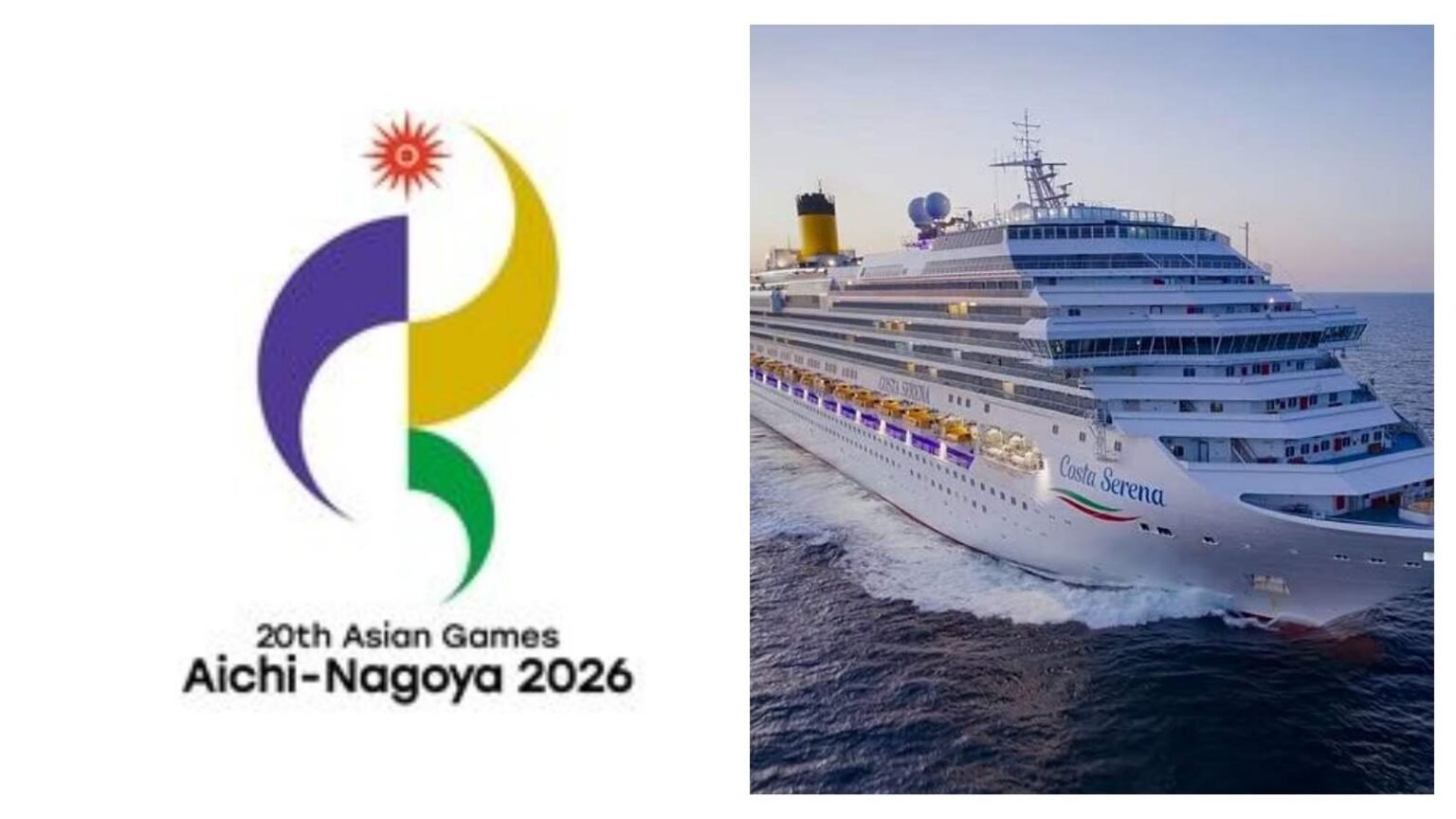
Organisers hired an Italian cruise ship to provide temporary accommodation for thousands of participants.
The ship offers thousands of rooms in one location. This allows organisers to increase capacity without constructing a large residential complex.
Around 4,000 to 5,000 athletes are expected to stay on the vessel.
The cruise ship also helps Nagoya manage costs. Building a traditional athletes’ village would require major investment and long-term infrastructure.
Using an existing vessel gives organisers a flexible alternative.
Temporary homes fill accommodation gap
Organisers will also use temporary accommodation made from wooden, shipping-container-style units.
These units will provide beds for around 2,000 athletes.
Hotels will house the remaining athletes and officials. Accommodation will cover Nagoya, Aichi and Tokyo.
Some events will take place in Tokyo. These include swimming, diving and equestrian competitions.
The approach creates a distributed accommodation system instead of one central athletes’ village.
That system also reflects the wider structure of the Asian Games. Competitions will take place across several locations.
Nagoya therefore does not need to build a single residential complex for all participants.
Instead, organisers are combining hotels, temporary units and a cruise ship to meet the demand.
The unusual plan shows how host cities can adapt when budgets and infrastructure limit their options.
For the Asian Games 2026 Nagoya athletes and officials, the accommodation challenge now appears to have a practical solution.
READ NEXT: Japan to probe origins of life and the solar system on Martian moons