

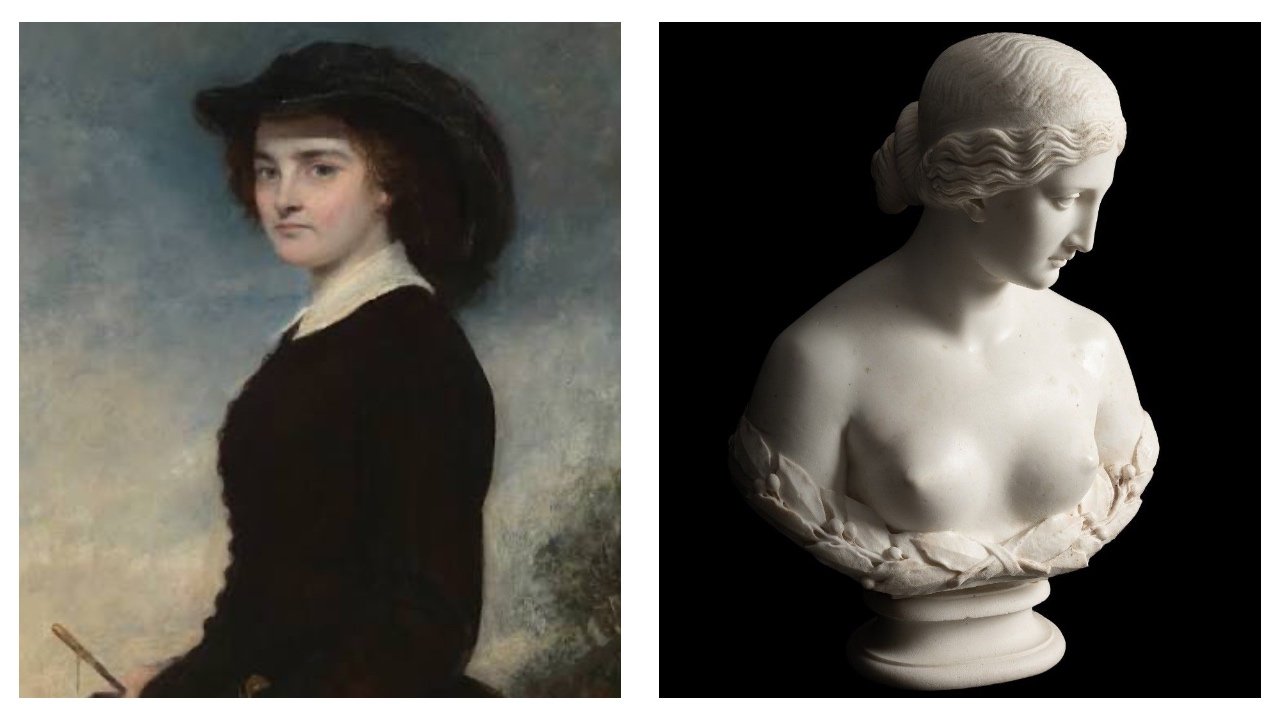
A rare marble sculpture by Harriet Goodhue Hosmer has been discovered in a Cotswolds garden after spending more than 70 years as a garden ornament.
The discovery has attracted attention from art enthusiasts and historians. Experts identified the work as a marble bust created by Hosmer, one of the leading American neoclassical sculptors of the 19th century.
The sculpture had remained largely unnoticed for decades. It came to light during a routine house valuation carried out by Chorley’s Auctioneers.
Thomas Jenner-Fust, a director at the auction house, discovered the piece during the valuation.
Chorley’s expects to auction the marble in Gloucester for around £18,000.
A rare debut work hiding in plain sight
The bust dates from 1854 and depicts Daphne, Apollo’s first love in Greek mythology.
An inscription on the sculpture reads, “Harriet Hosmer me fecit Roma”. The Latin phrase means “Harriet Hosmer made me in Rome”.
The discovery adds a fourth known marble version of the work. Before this find, historians had identified only three verified marble versions.
The Metropolitan Museum of Art in New York has documented examples of Hosmer’s work. Museums in the United States also hold several important pieces by the sculptor.
Hosmer was born in Watertown, Massachusetts, in 1830. She developed an early talent for sculpture and later built a successful career in Rome.
Actress Fanny Kemble recognised Hosmer’s artistic potential. Kemble encouraged the young sculptor to pursue her ambitions.
Hosmer eventually travelled to Rome, where she studied under British sculptor John Gibson.
Her career grew rapidly after she created popular works such as Puck and Zenobia, Queen of Palmyra. She also created a bronze sculpture of Senator Thomas Hart Benton.
Hosmer achieved success in a field dominated by men. She also became known for living openly with women at a time when society strongly condemned same-sex relationships.
The sculptor spent her later years between England and Rome. She eventually returned to her hometown in Massachusetts, where she settled permanently.
An overlooked heirloom’s true worth
Thomas Jenner-Fust described Hosmer as an exceptional artist and a trailblazer.
The homeowners had no idea that their garden ornament was a valuable marble sculpture.
According to Jenner-Fust, the family believes an ancestor bought the piece at an auction during the mid-20th century. However, they do not know exactly how it eventually ended up in the Cotswolds.
The sculpture remained outside for more than 70 years. Its familiar appearance meant that nobody suspected its true history.
The homeowners did not know that the piece was marble. They also did not know that Hosmer created it.
The discovery highlights the importance of checking old objects before throwing them away or selling them.
Jenner-Fust encouraged people clearing older properties to examine unusual artworks and objects carefully.
He described the process as similar to a treasure hunt. You never know what you might discover, he said.
The rare Hosmer marble now offers a remarkable example of how important works of art can remain hidden in private homes for decades.
The sculpture’s upcoming auction could also bring renewed attention to Harriet Hosmer and her contribution to 19th-century American sculpture.
READ NEXT: BSP Complex architect Gabriel Formoso hailed posthumously as National Artist for 2026