

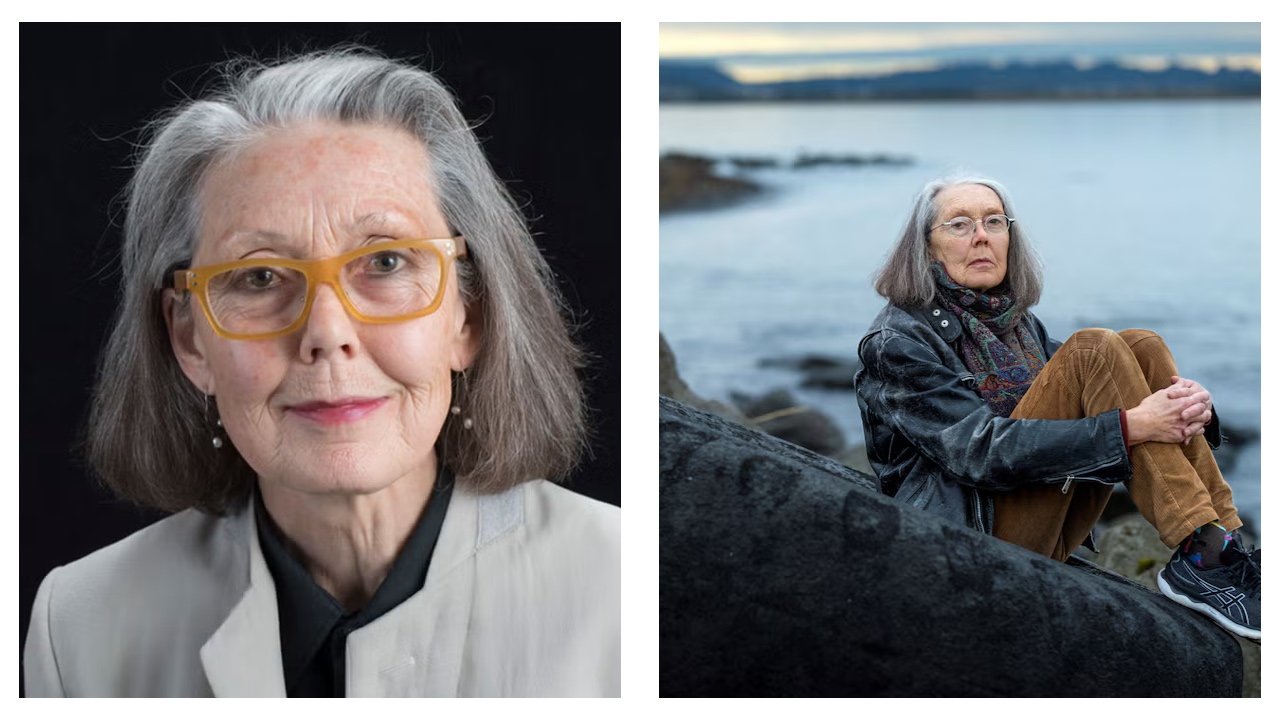
Anne Carson has built her literary world around ancient Greek poetry, myths and fragments of forgotten languages.
On Thursday, the Canadian poet and essayist reportedly won the Nobel Prize in Literature. The award recognises her ability to transform ancient ideas into bold forms of contemporary writing.
Carson’s work connects the distant past with the modern world. She moves between different genres while exploring language, history and human experience.
Bringing ancients into the present
A scholar of classics with a background in dead languages, literature, anthropology and history, her works have drawn heavily on ancient Greek and Roman texts.
Her 1986 debut, ‘Eros the Bittersweet,’ examined the pleasures and pains of desire through ancient Greek poetry.
She later turned the Greek myth of Geryon and Heracles into a tale of a gay love triangle in the 1998 verse novel ‘Autobiography of Red.’
Her writing moves between poetry, essays, fiction, translation and performance, a style the Swedish Academy recognised when it honoured her “for her bold and inventive oeuvre that, in playful dialogue with the classical tradition, has created new forms for contemporary literature,” Agence France-Presse reported.
The Academy said that Carson’s literary production has centred on the intersection between “the philologist’s obsession with words and the poet’s desire for new meaning.”
Her translations of classical Greek works, including fragments of Sappho’s poetry and plays by Sophocles and Euripides, were also praised and “may be regarded as independent works in their own right.”

Memories and myths
While Carson is known for her engagement with ancient texts, some of her most successful works have come from personal experiences.
Her 2010 work ‘Nox’ was created as an elegy for her brother Michael, who disappeared from her life for decades before his death.
Presented as an accordion-folded sheet containing photographs, letters and written texts, ‘Nox’ combined personal mourning with a translation of Roman poet Catullus’ own elegy for his brother.
The Swedish Academy called it “an unforgettable work.”
In her 2019 work ‘Norma Jeane Baker of Troy,’ Carson connected Marilyn Monroe with Helen of Troy.
The spoken and sung piece was drawn from Euripides’ Helen.
Anders Olsson, chair of the Nobel literature committee, said Carson’s range of influences, from ancient Greek writers to figures such as John Keats, Virginia Woolf and Emily Bronte, creates “playful and ironic” works that move “not only between classical and modern poetry but also between different genres and art forms.”
Nobel honour
For Carson, even language itself remains something unfinished and difficult to capture.
Writing about her struggles with Parkinson’s disease in 2024, she reflected on losing her handwriting.
“Hard to describe or explain the shame of bad handwriting,” she wrote.
“Bad handwriting is ugly. Also it is inauthentic. In the sense it is not you.”
Carson has also maintained a reputation for privacy.
The poet was in Iceland when the Swedish Academy reached her with news of the prize.
“She was very taken by surprise,” said Ingrid Carlberg, permanent secretary of the Swedish Academy.
She added that Carson was in Iceland “listening to the wind” during their brief conversation.
The Nobel recognition now places Carson among the most celebrated literary figures of her generation, joining the ranks of laureates such as Ernest Hemingway, Alexander Solzhenitsyn and Alice Munro.
READ NEXT: Students, teachers, parents unite in France’s growing school protests