

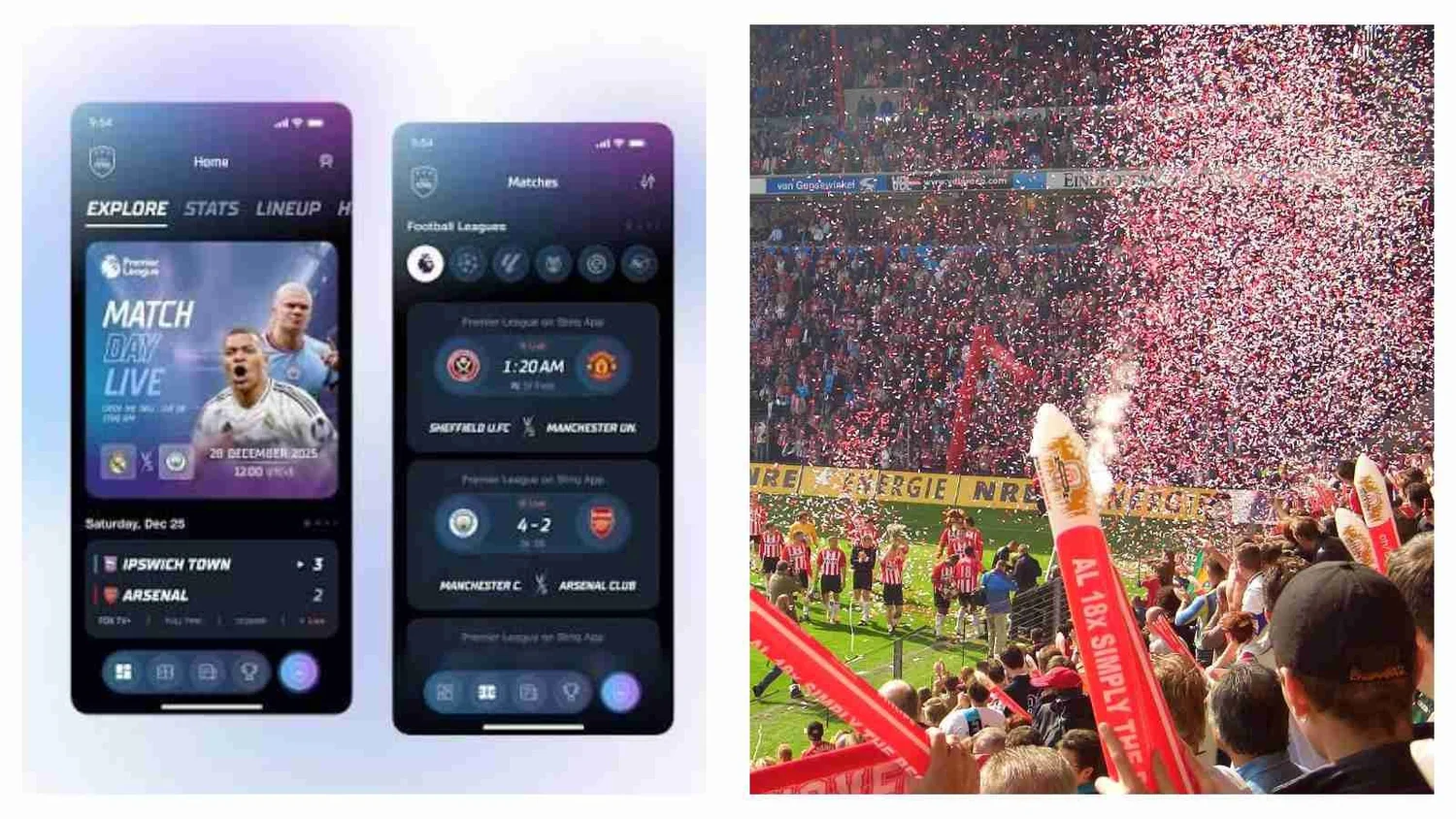
A football fan’s connection with the sport rarely ends when a game finishes.
It might start with a notification on Thursday morning. Then, a clip from last week’s match appears on the bus. A transfer deadline arrives on Friday. By Sunday night, fans check the latest points total.
Smartphones now keep football close seven days a week. Fans no longer need to wait for television updates at fixed times.
Instead, they can watch, analyse and enjoy football whenever they want.
Fantasy Football
The largest football activity in Britain actually has nothing to do with a ball. More than 11.5 million people played Fantasy Premier League in 2024/25, the most in the game’s 23 years of history.
It’s free, runs on a weekly deadline, and has quietly caught the weekday attention of football fans across the nation.
The game itself has even found its way into the corporate world, as many offices run leagues amongst themselves.
Not Just Live Television
Match of the Day is still on BBC One on Saturday nights, but the audience has moved. Its television viewership fell 10% last year, from 7.65 million to 6.88 million.
Over the same period, however, an average of 1.52 million people watched on iPlayer, the BBC Sport app, and the website. That’s roughly double the number lost from television.
The reason is convenience. Nobody wants to wait around for a scheduled television show anymore. They want to engage with football at a time that suits them best.
No wonder things like podcasts and YouTube channels are catching fans’ attention throughout the week.
Football Culture
Between the deadlines and the highlights, football fans and their culture naturally fill their week with football-related activities.
Club apps, for example, push line-ups an hour before kick-off. Podcasts generally turn midweek losses into an hour of listening. Group chats before, during, and after a match are constantly active.
Football even travels into places that have nothing to do with the league.
Games are a great example of this, with dozens of PC and console football games available.
It’s even made its way into the world of iGaming, with games like Goal Goal Goal Roulette and Goal Goal Goal Blackjack sitting alongside standard versions on sites where you can play online casinos.
And of course, there’s the time spent actually going to a match, getting food before and celebrating/commiserating afterwards.
For the athletic among us, you might even plan some games of five-a-side – as long as they don’t clash with any of that week’s matches.
Schedule Gave Way to Screen
Football always had a schedule. The game begins Saturday at three; highlights are shown at half ten, and it’ll appear in the paper on Sunday.
But what was once a once-a-week event for casual fans has become much broader.
Now, we can engage with football whenever and in ways we want to. It doesn’t matter if it’s via a game, a report, a video, or a quick league table update.
That’s how football now follows us around seven days a week – and fans love it.
READ NEXT: How have West Ham, Burnley and Wolves fared since dropping into the EFL Championship?