
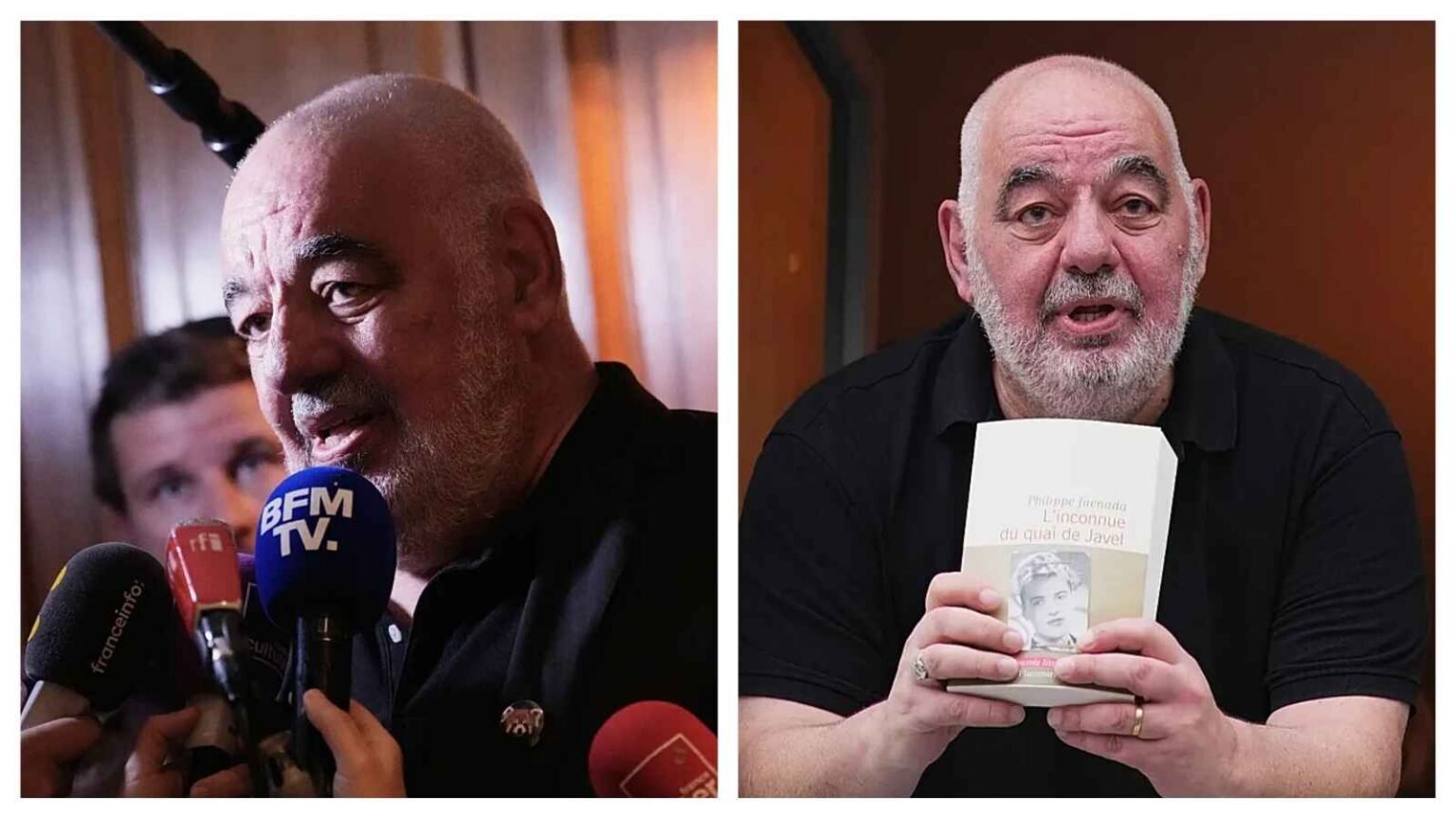
This year’s winner of France’s top literary award has admitted to using generative artificial intelligence (AI) while writing his novel.
Philippe Jaenada won the 2026 Prix Goncourt. He revealed his use of AI during an interview with France Inter radio on November 4, one day after the announcement.
The 62-year-old author used AI three times while writing his novel, L’Inconnue du quai de Javel (The Unknown Woman from Quai de Javel).
To ‘play with the reader’
Jaenada first used ChatGPT to insert a sentence into his novel. He wanted to “play with the reader”, according to Agence France-Presse.
He also told the Goncourt jurors about the sentence the day before the interview. He joked that “if it comes out, I know who it will come from.”
His second use of AI had a different purpose. Jaenada wanted to make fun of ChatGPT because it often gives absurd answers about technical details.
Finally, the author used AI to research technical information for his novel.
Jaenada is well known for writing books about unsolved crimes. However, he believes writers should not ignore the development of artificial intelligence.
“I don’t think you can push AI away; you can’t act like it doesn’t exist,” he said.
“You have to use it, you have to acknowledge it, you have to tame it and not let yourself be replaced. It has to be useful.”

About ‘The Unknown Woman from Quai de Javel’
L’Inconnue du quai de Javel tells the story of a real unsolved murder from 1949.
The case centres on Louise Cansot, a 29-year-old woman from Brittany. Artists in Montparnasse often used her as a model. This earned her the nickname “the woman with a hundred portraits”.
Authorities discovered Cansot’s body on September 7, 1949. However, investigators never identified her killer.
The 300-page police report described her as a woman of “ill repute”. This description led to assumptions about possible drug involvement or sex work.
French newspaper Le Monde praised the novel’s humour and its “touch of grumpy tenderness”.
“He spares no effort in trying to understand his heroine,” the newspaper wrote, as cited by The Guardian.
Jaenada has reached the Goncourt shortlist four times. His other novels include Sulak (2013), La Petite Femelle (2015) and La Serpe (2017).
Another book withdrawn over alleged AI use
Jaenada’s admission comes amid growing debate about AI in French literature.
Recently, the Académie Goncourt removed Canadian-Haitian author Thélyson Orélien’s novel C’était ça ou mourir (It Was That or Die) from its longlist.
The decision followed allegations of plagiarism and claims that AI had written almost the entire book.
The novel had emerged as a potential frontrunner for the Goncourt award. However, the controversy led to its withdrawal.
Orélien’s Montreal-based publisher, Éditions du Boréal, later ended its partnership with the author. Following an investigation, the publisher also announced that it would stop reprinting the book.
Meanwhile, Orélien has denied using AI in his work.
Prix Pascal: the literary prize for AI-written books
The use of AI has been a particularly hot topic in the French literary community, especially after last month’s launch of the Prix Pascal de Littérature IA, a new literary prize that seeks to recognize books co-written with AI.
Interested participants must submit an unpublished manuscript of between 10,000 and 50,000 words, as well as information about the AI model and prompt used to generate the text.
While the work must be in French, the prize is open to all writers around the globe.
It also allows all major language models, such as ChatGPT, Claude, Gemini, and LLaMA.
The prize was founded by technology entrepreneurs Philippe Rodriguez, Albin Serviant and Gilles Mentré.
“Our intention is not to say that AI is great and that it will replace everything,” Serviant told Le Devoir.
“Our intention is really to look pragmatically at what will come out as text. The prize, above all, advocates transparency.”
Applications for the Prix Pascal are open until the end of November. A shortlist of 10 books will be chosen ahead of the announcement of the winner in December.
The winner will be determined by a five-member jury led by essayist Jacques Attali and comprised of National Center for Scientific Research director Alexandre Gefen, intellectual property and digital law specialist Julie Jacob, journalist Loïc Hecht, and French AI and Digital Council member Etienne Grass, according to Le Devoir.
READ NEXT: Film news: The biggest winners at the 74th FAMAS Awards from Maricel Soriano to Maris Racal