

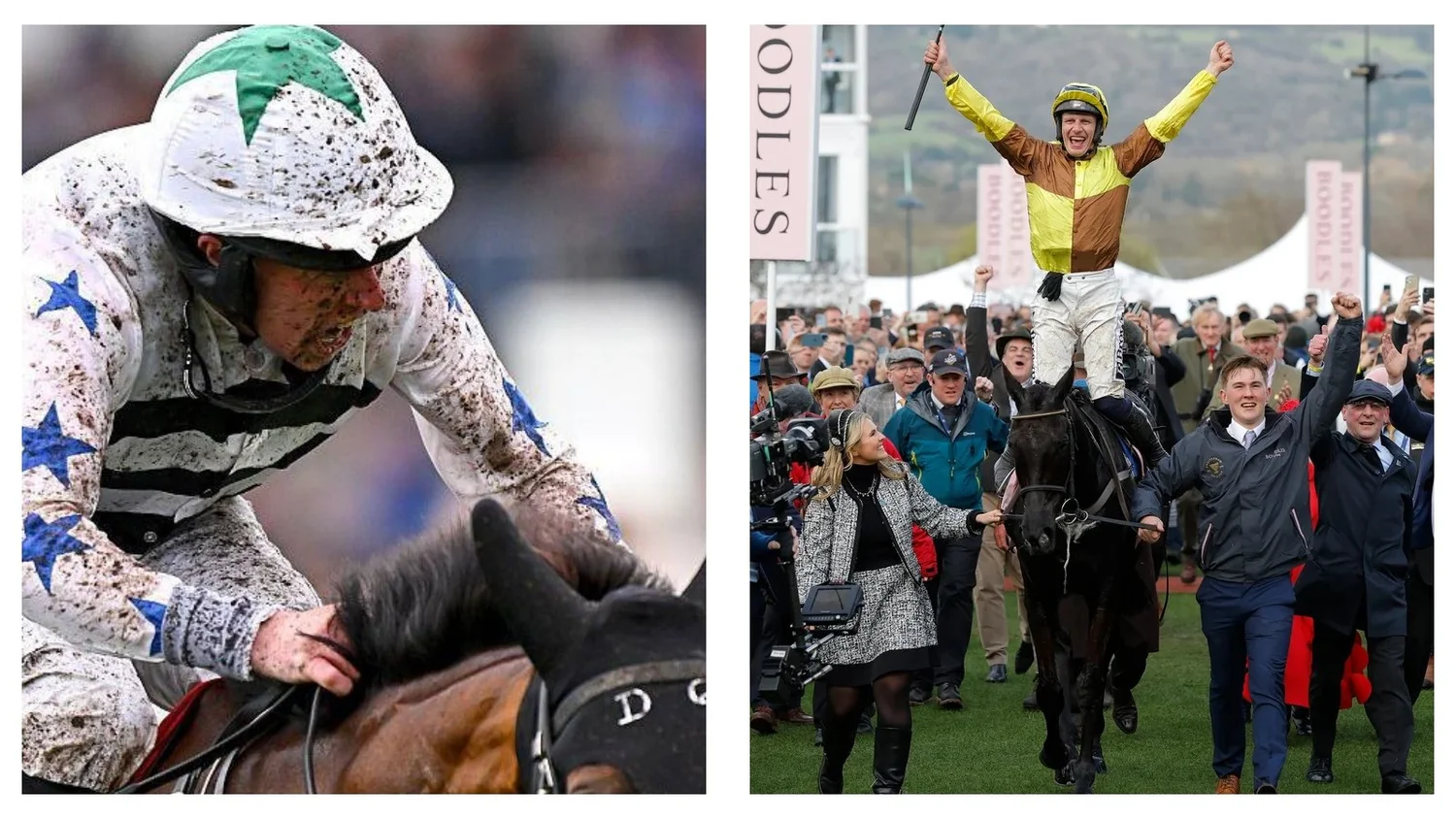
The Prestbury Cup rewards the country whose trainers produce the most winners across the 28 Cheltenham Festival races. For British racing fans, the results make difficult reading.
Britain won the trophy five times during its first five editions. The 2019 competition ended in a 14-14 draw. Since then, Ireland has won seven consecutive Prestbury Cups.
The biggest blow came at the 2021 Cheltenham Festival. Irish-trained horses won 23 of the 28 races. This remains the largest winning margin in the competition’s history.
Britain made a much stronger challenge in 2026. Its trainers secured 13 winners, just two behind Ireland’s 15. However, Air Of Entitlement’s victory in the final race settled the trophy for Ireland.
The Prestbury Cup has become a symbol of Ireland’s dominance. But how did British racing fall so far behind its rivals across the Irish Sea?
In the past, Cheltenham offered Britain an opportunity to celebrate its strength as a National Hunt nation. Now, the balance of power has shifted dramatically.

Great horses
Britain and Ireland have produced some of the greatest horses in National Hunt racing. Arkle, Flyingbolt, Captain Christy, Istabraq, Hurricane Fly and Tiger Roll all won major Cheltenham prizes.
For many years, however, British trainers held the upper hand during Festival week. Backing Britain to win the Prestbury Cup rarely seemed like a risky decision.
That situation has changed.
Willie Mullins, Gordon Elliott and Henry de Bromhead have helped Ireland establish a remarkable advantage. Irish-trained horses now dominate many of the Festival’s biggest races.
Mullins has become the leading trainer at Cheltenham. He has claimed the award for eight consecutive years, from 2019 to 2026.
His record now stands at 121 Festival winners. He also collected eight victories at the 2026 meeting.
The last non-Irish trainer to win the leading trainer award was Nicky Henderson in 2012. That statistic highlights the scale of Ireland’s recent success.
Money also plays an important role in this growing gap.
British racing has faced long-running concerns about prize money. Lower returns can make it harder for British trainers to attract owners and retain expensive horses.
Owning a racehorse requires a substantial financial commitment. Owners must pay purchase costs, training fees and other expenses throughout the year.
Better prize money can make Irish racing a more attractive option. It can also encourage owners to invest in stronger horses and better facilities.
The Covid-19 pandemic
The Covid-19 pandemic created another major challenge for British racing.
Racecourses lost valuable income when restrictions forced them to close their gates to spectators. British meetings continued behind closed doors for much of the period.
The restrictions lasted until 17 May 2021, when spectators could return to outdoor sporting events in England under limited conditions.
Racecourses rely on more than betting revenue. Ticket sales, hospitality and other raceday spending also support the industry.
The loss of this income placed further pressure on an already difficult financial situation.
Britain had introduced changes to the Horserace Betting Levy in 2017. These changes aimed to increase the money that betting companies contributed to racing.
The levy now charges qualifying betting operators 10% of their gross profits from British racing. It applies to profits above the £500,000 annual threshold.
However, the pandemic created further financial pressure. In December 2020, former British Horseracing Authority chief executive Nick Rust called for an earlier review of the levy.
He wanted the Government to bring the review forward from 2024. The aim was to help British racing deal with the financial damage caused by Covid-19.
Meanwhile, Irish racing continued to strengthen its prize-money position.
Britain still offers some enormous prizes. The Cheltenham Gold Cup and Grand National remain two of the sport’s biggest events.
However, the difference becomes clearer when comparing ordinary fixtures. Ireland offers higher average prize money per race.
In 2025, British racing distributed £194.7 million across 10,123 races. Ireland distributed approximately £61.4 million across 2,894 races.
That gave Ireland a higher average prize fund per race. The figures help explain why owners and trainers may look towards the Irish racing industry.

Owners looking towards Ireland
Owners have therefore been more keen on sending their horses to race, or be trained in Ireland.
Perhaps more pertinently, with Cheltenham Festival dominance in mind, the major owners with the real clout are now more prevalent on the Irish racing scene than in Britain.
The Riccis, Gigginstown House Stud and now even Cheveley Park have become increasingly involved and are having horses trained on the Emerald Isle.
The racing colours of that triumvirate have mopped up some major prizes in recent years.
Among the big hitters, an exception is perhaps JP McManus, who has maintained an interest in and been a major supporter of jump racing on both sides of the Irish Sea and has had Cheltenham winners for both Britain and Ireland.
The counter argument holds that this is merely cyclical and that, by an evening-out process of nature, Britain will train more Festival winners again in the future and Ireland will have lean years by comparison.
However, relying on a theoretical cycle is a dangerously complacent stance to take.
Unless British prize money increases and it can attract owners capable of buying the better horses and having them trained here, the nation will continue to give best to its friendly rivals from across the water.
READ NEXT: NBA news: Philadelphia 76ers continue to shine as Luka Dončić leads MVP race and rookies impress