
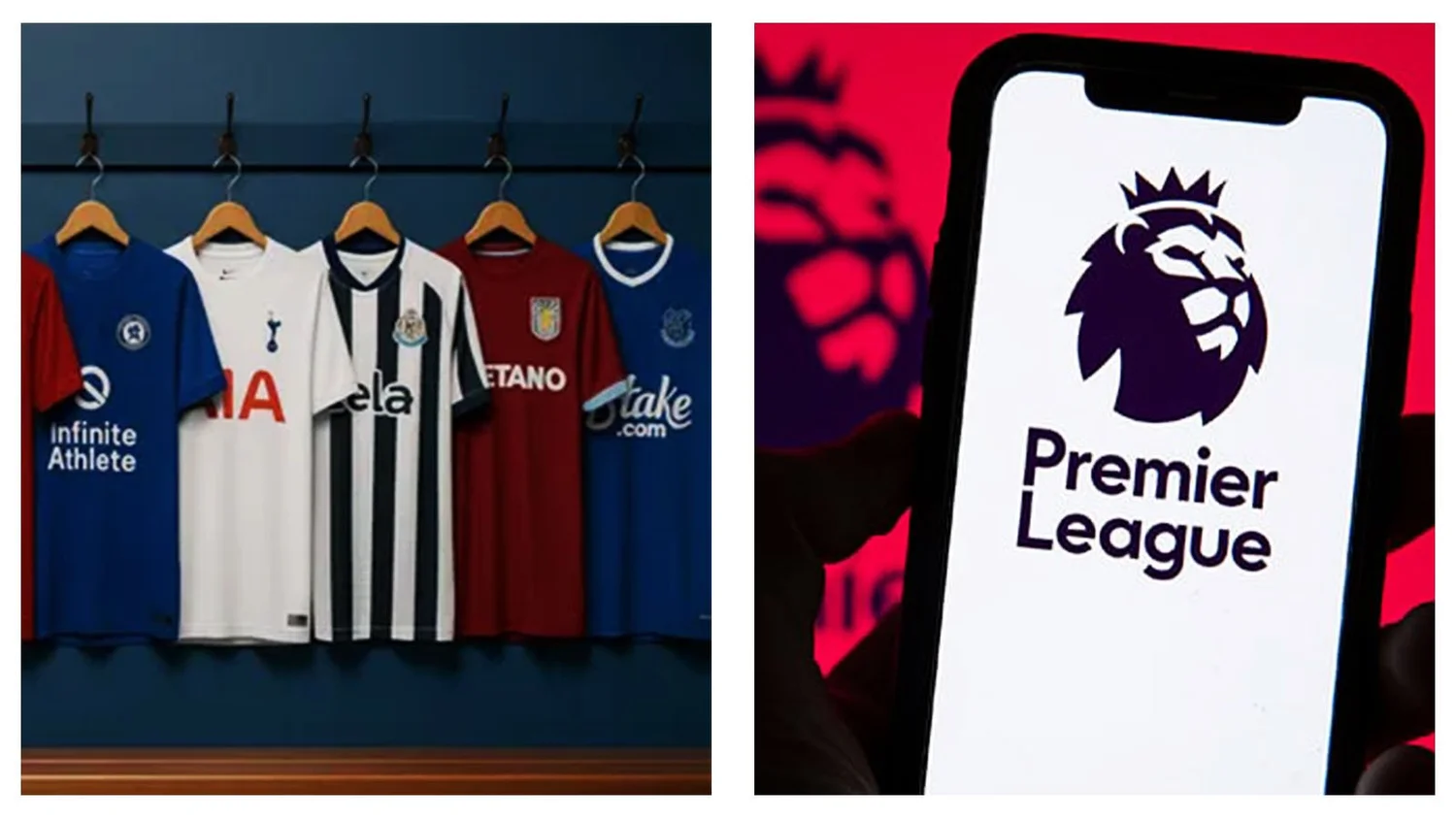
Supporters checking out the new kits this season will notice a major change.
For the first time, no Premier League club has a gambling brand on the front of its matchday shirt.
However, betting logos have not disappeared from English football. Many brands have simply moved to different parts of club kits and stadiums.
The change follows a series of gambling reforms introduced over the past two years. Those reforms have also changed the online casino and betting industries.
Gambling Reforms Squeezed the Smaller Operators Out
For the first time, no Premier League club has a gambling brand on the front of its matchday shirt.
Clubs Chose to Clear the Shirt Fronts
The shirt change itself was agreed back in April 2023. In the Premier League’s statement on gambling sponsorship, the clubs said they would collectively withdraw gambling brands from the front of matchday shirts, becoming the first UK sports league to do so voluntarily.
They gave themselves until the end of the 2025/26 season to find replacements.
At the time, eight clubs had a gambling company as their main shirt sponsor, with those deals reportedly worth around £60 million a year in total.
The decision came during the same government review that produced the stake caps and slot rules, so the two stories have always been linked.
Ministers welcomed the move, and the league said it would also work with other sports on a shared code for responsible gambling sponsorship, which the football authorities adopted from the 2024/25 season.
It is worth being clear about what the agreement does not cover. It applies only to the front of the matchday shirt.
Sleeves, training kits, stadium boards and digital advertising were all left open, and that is exactly where the money has gone.
Sponsors Moved to Sleeves and Training Kits
Fans watching the Premier League this season will still see plenty of betting brands.
The main difference is their location.
Sleeve sponsorships have become more prominent. Pitch-side advertising also continues to feature betting companies.
Manchester United, for example, signed a training kit partnership with Betway. The deal was reportedly worth around £20 million per year.
Other clubs have also agreed partnerships connected to overseas betting markets. Advertising rules can differ in those markets.
The companies behind these deals are largely those that adapted to the new regulations.
They had the resources to introduce affordability checks and change their slot products. They also had the capacity to pay the statutory levy.
That leaves them with significant budgets for sports sponsorship.