

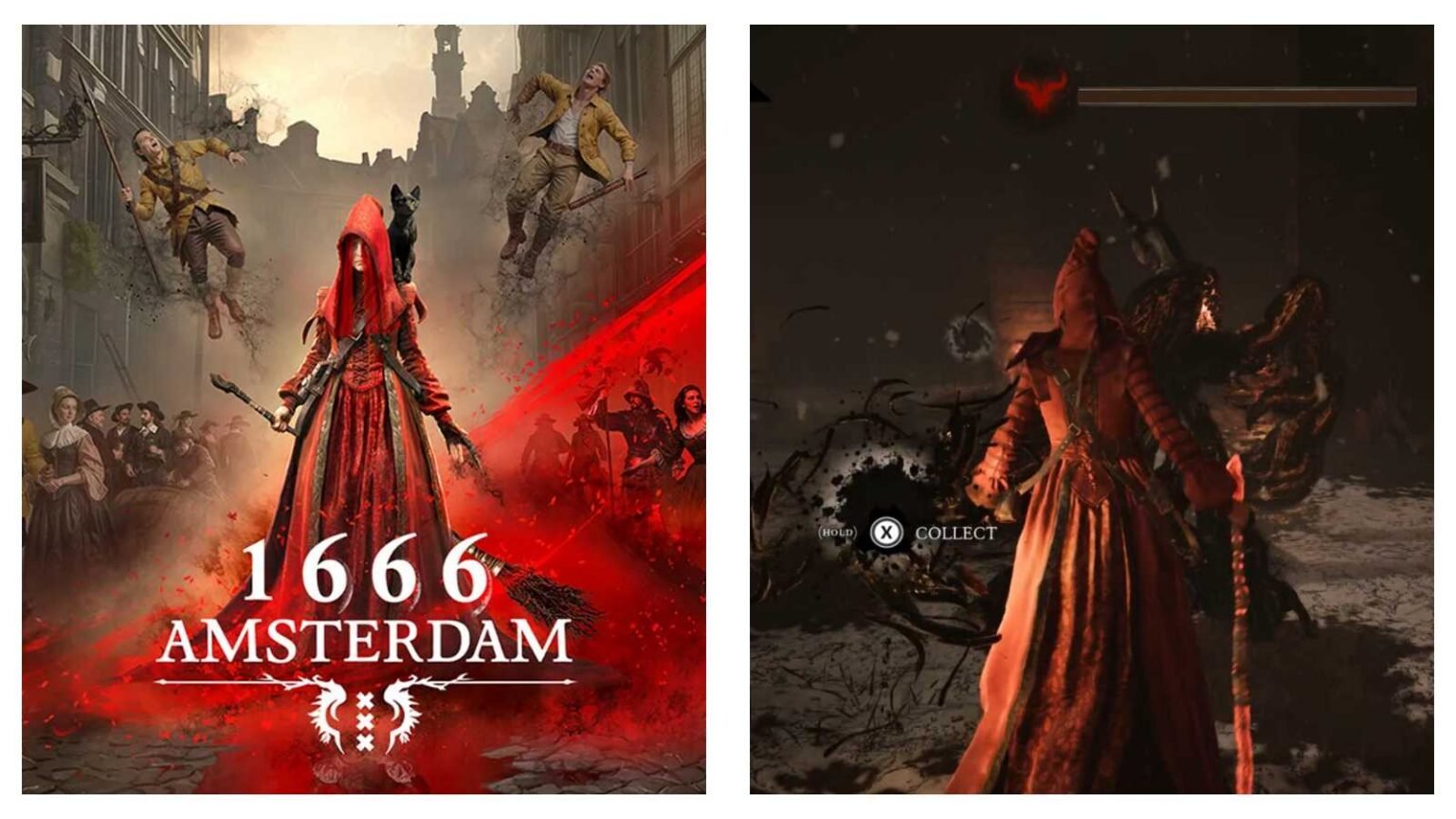
Mysterious, dark and witchy, 1666 Amsterdam offers a different kind of action-adventure experience.
Panache Digital Games developed and published the game, while Patrice Désilets serves as its director. Désilets also directed early entries in the Assassin’s Creed series.
Players take control of a witch who explores 17th-century Amsterdam in disguise during the day. At night, she hunts and battles demons.
Players can also switch to her companion, a human trapped inside a cat’s body.
The game has been in development for approximately 16 years. That long development cycle made 1666 Amsterdam one of the more anticipated new titles among adventure game fans.
The developers first released a prologue demo in June to give players an early look at the game.
On August 25, Panache released 1666 Amsterdam in early access on Steam. The early-access version offers around 15 hours of gameplay, while the developers plan additional content for the full release.
1666 Amsterdam reception
Players have given 1666 Amsterdam a mixed reception.
Many gamers enjoy the game’s character-switching system and its unusual story. The narrative allows players to move between the present and the past while uncovering hidden secrets.
However, other players believe the gameplay feels too basic for a project that has spent so many years in development.
Some players have criticised the combat system. They argue that the main character has limited combat abilities and that the fights do not offer enough variety.
Others have found the story’s constant movement between different periods confusing. The frequent back-and-forth can make it difficult for players to follow the narrative.
Gameplay and content remain the biggest concerns for many early-access players. However, the game’s use of AI has also attracted significant attention.

Players responds to AI use
The debate over AI began after the release of the 1666 Amsterdam prologue in June 2026.
Players questioned whether the developers had used generative AI to create some of the game’s assets. Some gamers also claimed that the demo and marketing materials contained visual elements with obvious signs of AI generation.
Panache Digital Games responded to the concerns and launched an internal investigation.
The studio said a team of more than a dozen artists reviewed the assets in question. The investigation found that some early versions of assets had appeared in the prologue.
These assets included several in-game portraits and external marketing materials.
Creative director and studio co-founder Patrice Désilets later confirmed that the developers had used AI during the early stages of the project.
However, he said the studio mainly used AI during conception and pre-production. According to Désilets, the developers later removed AI-generated material from the game.
“Yes, we use some AI in the process, mostly at the beginning in conception and pre-production. It’s been totally removed, and we won’t be using any AI anymore,” Désilets said.
His comments helped clarify the studio’s position on AI. Panache now says that it will not use AI in the game’s future development.
For now, 1666 Amsterdam remains in early access. Players will continue to judge the game’s combat, story and overall experience as the developers add more content.
The title’s unusual setting and long development history have already created plenty of interest. However, its mixed early reception shows that the game still has work to do before its full release.
READ NEXT: ‘God of War Laufey’ backlash: Why a lack of Kratos divided the fanbase