

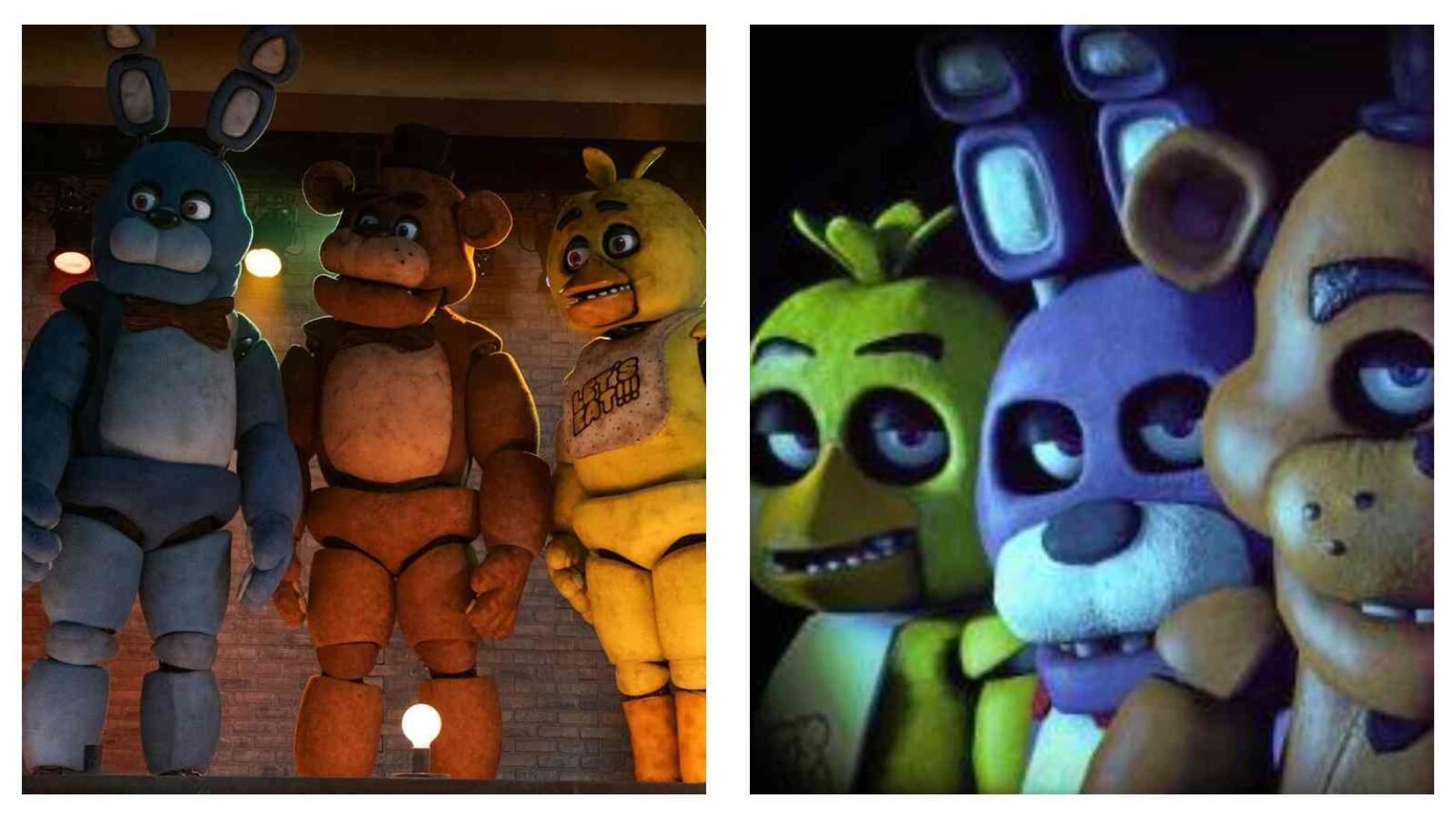
Working the night shift as a security guard in a haunted kids’ restaurant sounds like a typical survival horror game.
However, few games have matched what Five Nights at Freddy’s has achieved since its release in 2014.
The game uses creepy sound design, terrifying animatronics and sudden jump scares. Even experienced players can fall victim to its tricks.
FNAF also keeps its gameplay simple.
You remain inside one room. You must check security cameras and control remote doors. Your goal is to keep dangerous animatronics away.
At the same time, you must manage your limited electricity. You need to survive five nights and collect your small paycheck.
The concept sounds simple on the surface. However, hidden clues soon revealed a much bigger story.
The power of ambiguity
While many games explain their stories clearly, FNAF takes a different approach.
It uses ambiguity to build its lore.
The game hides clues and Easter eggs throughout the experience. One example involves a newspaper clipping about five missing children.
Players can also see strange visual hallucinations. Some flashes display the words “IT’S ME” for less than a second.
The game never explains how every clue connects to the wider story.
Instead, players must investigate and form their own theories.
Matthew Patrick, also known as YouTube creator MatPat, discussed this approach in a report from Vulture.
“You could play through one of the early games of Five Nights at Freddy’s in about three hours. But as you do it, you’d fixate on these small details.”
“The number of buttons on an animatronic, or a background detail shifting based on your camera angle, things like that”, Patrick said.
Patrick became famous through The Game Theory YouTube channel. The channel explored the hidden stories behind popular games.
He stepped back from the channel in 2024.
The small details helped FNAF create a deeper mystery. Players could keep searching for answers long after finishing the game.

Tapping into community storytelling
Five Nights at Freddy’s became a major hit after its 2014 release.
The rise of YouTube streaming helped the game reach a much wider audience.
Creators such as PewDiePie, Jacksepticeye and Markiplier posted “Let’s Play” videos. Their content allowed millions of viewers to experience the horror alongside them.
The community quickly became part of the FNAF experience.
Patrick explained why the game stood out.
“It’s all told through atmospheric storytelling. It had never been done before.”
“In a lot of other games, if a character has extra toes or whatever, you’d just assume that the developer forgot, or that it’s a bug or whatever.”
“But in Five Nights at Freddy’s, there are no coincidences.”
“It felt like each of those details was an intentional choice leading you to a different part of the story,” Patrick said.
Fans soon created their own theories about the FNAF lore.
They studied characters, locations and small visual details. They then connected those clues to create larger theories about the franchise.
This approach helped FNAF develop a strong community around its story.
Fans did not simply play the games. They also investigated them together.
YouTube darling turns Hollywood hit
Scott Cawthon, the one-man studio behind the cult classic, capitalised on its popularity and released several games in the franchise, with each one seemingly still ambiguous but filled with more clues to keep the fans on their toes.
To date, there are 11 main games, 9 spin-offs and 6 expansions in the official franchise, alongside 58 books that explore FNAF.
Not to mention several fan-created songs and animations and FNAF-inspired games from different developers that have built what is now a sprawling dedicated community.
The game even turned into a brand after Cawthon signed a series of licensing deals in late 2015 that allowed the likeness of the animatronics to be imprinted on a wide range of merchandise like Funko Pops and Halloween costumes, Forbes reported.
But its biggest and latest endeavor yet is breaking into Hollywood as an official horror movie produced by Blumhouse.
The film, which shares the titular name of the first game in the franchise, managed to secure $80 million on the opening weekend when it was released in 2023, according to The Hollywood Reporter.
It was Blumhouse’s biggest hit, head Jason Blum told audiences at CinemaCon on Wednesday, where he also revealed a teaser for its upcoming sequel that is set to hit theatres exclusively on December 5 this year.
Directed by Emma Tammi, the sequel will see actors Josh Hutcherson, Elizabeth Lail, and Piper Rubio reprise their roles in the film alongside Matthew Lillard, who plays the iconic antagonist William Afton.
While the film incorporated a clear, continuous narrative, it didn’t shy away from blink-and-you’ll-miss-it details that the whole franchise popularised – and ultimately defined a generation of gaming sleuths.
READ NEXT: Live-action remake of Disney’s ‘Tangled’ put on hold, reports suggest