
Halloween is back, bringing all the season’s hallmarks: eerie supernatural tales, horror movies filled with predictable jump scares, and kids getting their candy buckets ready for a night of trick-or-treating.
Demonic possession movies? Overrated. Slasher villains? Formulaic. The crushing realisation that we’re utterly insignificant in an indifferent cosmos? Now, that is the ultimate All Hallows’ Eve nightmare.
But if you’re looking for horror that doesn’t rely on costumes, makeup, or cheap scares, here are my picks for the best short stories to leave you with just the right amount of existential dread.
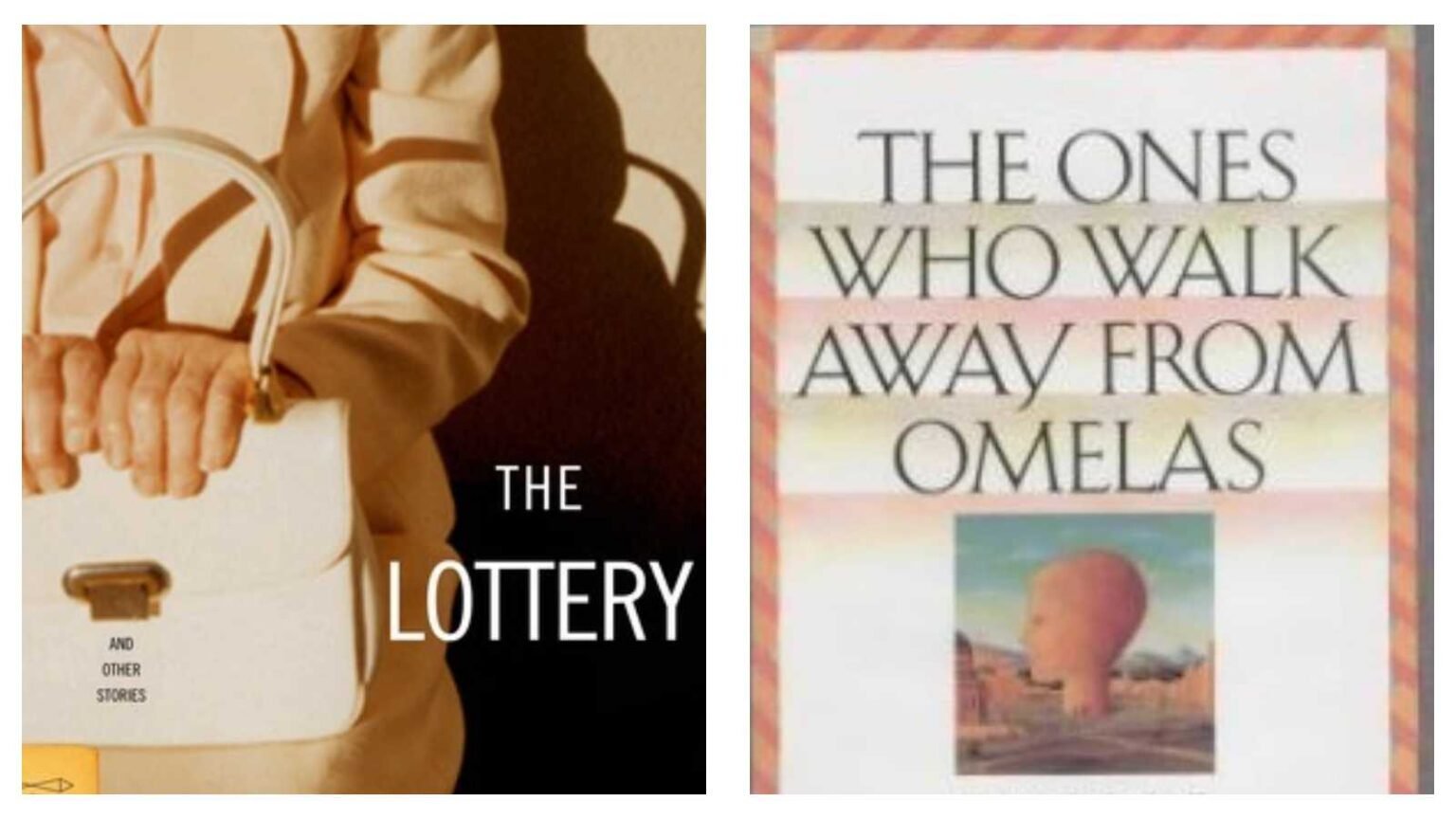
The Lottery
Written by the renowned Gothic novelist Shirley Jackson, “The Lottery” received a ton of hate mail after it was published in the American magazine The New Yorker in 1948.
“The Lottery” horrified readers to the core; one reviewer said they resented being “tricked” by the magazine into reading “perverted stories.”
One hate mail said: “Tell Ms. Jackson to say out of Canada.”
Other reviewers commented with morbid curiosity, with some even suggesting the story might have been based on an actual event.
What made “The Lottery” truly captivating is its social commentary on how tradition, with public support, can trample on individual rights and liberty.
The Ones Who Walk Away From Omelas
Imagine living in a world where everyone and everything exists in a blissful state: a utopian society free from suffering.
This place is Omelas, a heaven on earth, where people live a happy and fulfilling life typical of utopias. There are no laws, but it is peaceful, abundant in resources, with amazing architecture and green, lush fields.
But Omelas has a secret. A terrible secret. It appears that achieving a utopia has a price.
“The Ones Who Walk Away From Omelas” by Ursula K. Le Guin (1973) is one of the most thought-provoking works of literature ever written.
It forces readers to think about how far humans can push the boundaries of morality in the pursuit of absolute happiness for all.
The Jaunt
From the modern horror lord himself, Stephen King’s “The Jaunt” (1981) is a terrifying yet clever take on space travel.
In the story, a family is preparing to enter the Jaunt, a mysterious field that can instantly teleport them to another planet.
However, there is a twist. A living specimen entering the Jaunt has to be completely unconscious to emerge safe and sane on the other side.
Past experiments showed that animals and humans who entered the Jaunt while conscious suffered from severe psychological effects before dying.
So, imagine the shock and horror of one of the characters when he realised his young son purposely entered the Jaunt while awake.
“The Jaunt” touches on the eternal consciousness, a concept that has fascinated both the religious and scientific communities.
This curious kid got his consciousness flung into the vastness of nothingness for millions, if not trillions, of years.
Needless to say, the kid emerged on the other side completely insane, screaming the same phrase over and over: “It’s longer than you think, Dad!”

The Last Question
When it comes to writing science fiction, Isaac Asimov is truly a level of his own.
His 1956 short story “The Last Question” is one of the early takes on the future role of artificial intelligence in human society.
Combine the tremendous potential of AI with the inescapable clutches of entropy (heat death), and you will get a piece of literature that dares to question anything we think is possible.
In the story, humans have created an AI that is capable of answering any question. Except one.
“Is reversing entropy possible?”
Entropy is, in simple terms, the universe’s version of old age. According to the laws of thermodynamics, it marks the point at which stars can no longer produce heat and usable energy has been exhausted, leaving the cosmos to drift toward a cold, lifeless darkness.
After timeless years of computing and analysing the data it has collected, the AI finally arrives at an answer to this last question.
The problem was that, by then, humanity was gone, leaving no one behind to receive the answer.
At this point, entropy has run its course and brought the universe to its end. In essence, the AI is all that remains of existence.
With nothing left in existence but chaos and emptiness, the AI delivered its final answer: “Let there be light!”