

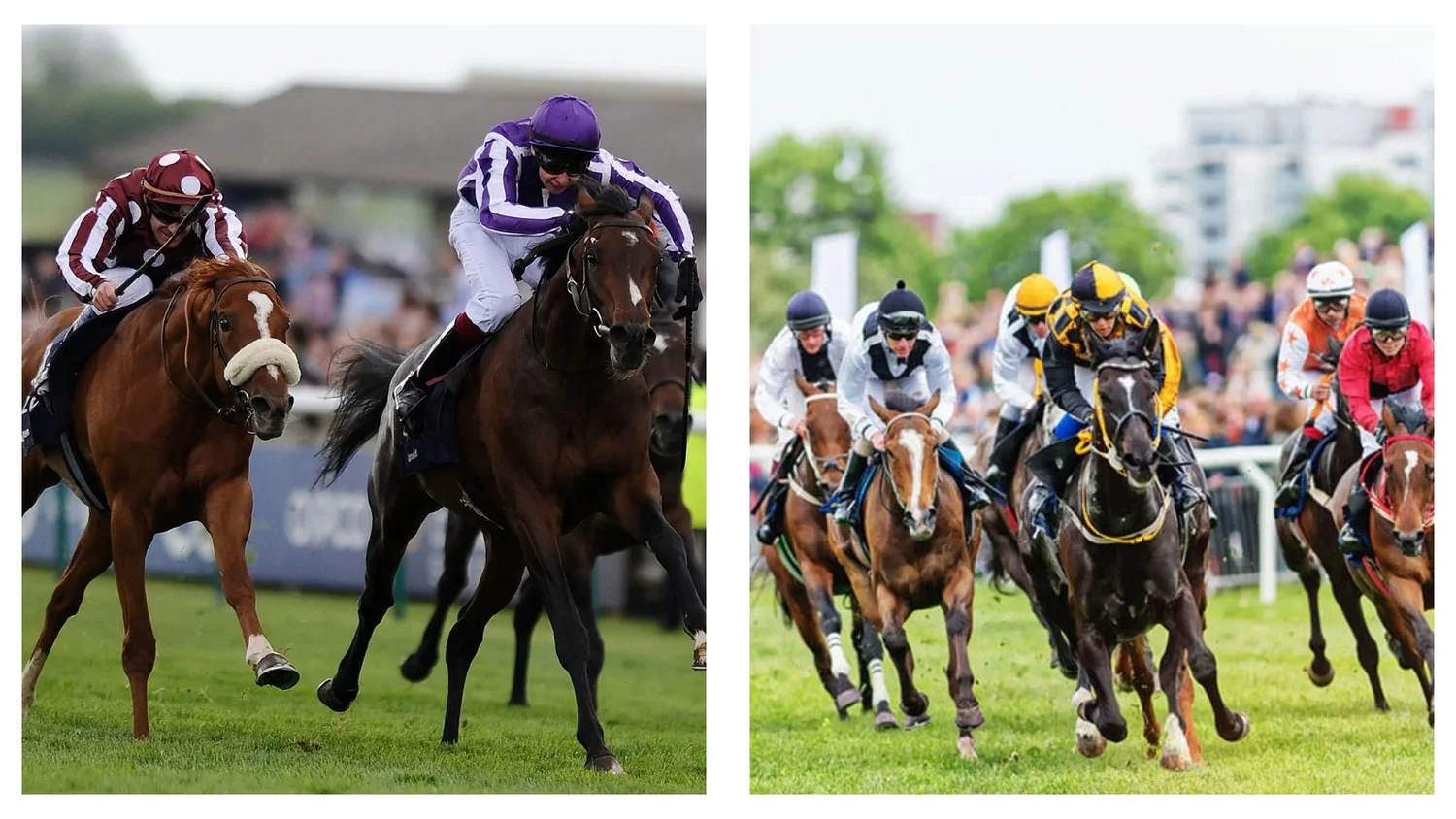
Discover proven horse racing betting strategies to make more informed selections. Learn how to analyse form, ratings, jockeys, trainers, track conditions, race pace and betting odds before placing a bet.
There is no magic formula for winning every horse race. Many experienced punters have their own theories and betting systems. However, no strategy can guarantee a winning result.
That does not mean research has no value. In fact, careful analysis can help you make more informed decisions and avoid impulsive bets.
Whether you are betting at Cheltenham, Royal Ascot, the Kentucky Derby or a midweek meeting, a structured approach can improve your understanding of the market.
This guide explains the key horse racing betting strategies you can use to assess runners, compare odds and manage your bankroll responsibly.
Understanding horse racing betting fundamentals
Horse racing involves many variables. Therefore, successful betting requires more than simply choosing a horse because you like its name or colours.
A good starting point is to study the horse, the race and the conditions.
You should also compare the available odds with your own assessment. This can help you identify potential value rather than simply backing the most popular runner.
There are no guaranteed winners. Nevertheless, disciplined research can help you make better-informed selections over time.

How to research the horse effectively
This is your essential starting point for successful horse race betting, and it goes far beyond simply liking a name or racing silks.
While you’ll find bettors who swear by these loose metrics, they’re no guarantee of winning selections.
Analysing horse form: The foundation of smart betting
Start by checking the horse’s last three to five races.
Look at finishing positions, but do not stop there. Consider the quality of the opposition and the circumstances of each race.
For example, a horse finishing fourth in a strong race may have performed better than a horse winning a weak event.
Race conditions analysis: Identify whether previous races were on turf, dirt or all-weather surfaces. Was the distance a five-to-seven-furlong sprint or an energy-sapping stayers race over two miles?
Horses that excel in specific conditions (such as turf sprints or soft ground staying races) are more likely to repeat their success.
Quality of competition: Who did the horse compete against? Victory over weaker opposition may not indicate genuine ability, so always assess the calibre of competitors. Check if any rivals have won since or are rated horses.
Winning margins matter: Analyse how decisively the horse won or how narrowly it lost. Horses winning by large margins may be in outstanding form, while narrow wins or losses could indicate inconsistency or that they were ridden for a place rather than a win.
Race time comparison: Compare finishing times across similar races. Some horses post respectable positions but lack the speed to compete at higher levels. Use sectional timing data where available for deeper insights.
Franking the form: If a horse performed well in a race, and one or more competitors from that race subsequently excel in their next outing, it “franks” the form of the original horse. This validation strengthens confidence that the performance was genuine rather than a fluke.
Preferred venues and track specialists: Some horses thrive at particular racecourses. Review their course records to spot patterns. Trainers often target specific tracks when they know their horse performs well there. For example, some horses love right-handed tracks but struggle going left-handed.
Injury history and layoffs: Research whether the horse has suffered major injuries that could affect performance. Horses with recurring issues might struggle to maintain peak form. Also consider horses returning from long breaks – they may need a run to regain fitness.
Understanding class and race levels
Race classification hierarchy: Races are divided into distinct classes:
- Group/Grade 1, 2, 3 (the elite level of horse racing, Group for Flat, Grade for National Hunt)
- Listed races (High quality, just below Group/Grade level)
- Handicaps (Horses carry different weights based on ability)
- Claimers (Horses that can be purchased during the race)
- Novice and Maiden races (For inexperienced horses)
- Bumper races (Flat races for future jumpers)
- Conditions races (Weight-for-age contests)
- Selling races (Winners can be purchased afterward)
- Races beneath Group/Grade/Listed level are classed between 2-7
Horses who do well at Group/Grade races usually hold a competitive advantage when they drop into lower-class events typically hold a competitive advantage.
Class drops create opportunities: Horses “dropping in class” often outperform due to facing weaker competition. This is a key betting angle that savvy punters exploit. However, it could mean a decline in a horse that was once performing at a higher level.
Decoding horse racing ratings
Ratings measure a horse’s ability based on past performances, ensuring competitors of similar standards race together for fairer competition.
Official Ratings (OR) are assigned by governing bodies like the British Horseracing Authority (BHA) in the UK or the Jockey Club in the US. These ratings determine a horse’s carrying weight in handicaps.
A horse’s OR reflects:
- Recent race positions
- Finishing times
- Competition quality
- Race level
Rating scale interpretation:
- 120+ OR: Elite, Group/Grade-level performers
- 100-119 OR: Good horses, competitive in quality handicaps
- 90-99 OR: Mid-level performers
- 80-89 OR: Average horses in lower-grade races
- Below 80 OR: Below-average horses in selling/claiming races
Racing Post (RP) Ratings provide analytical depth, offering performance-focused assessments of strengths, weaknesses and potential.
RP Ratings Scale:
- 130+: Elite, top-class horses (Group or Grade 1 level)
- 120-130: Very good, Group-level horses
- 100-119: Good to average, often competitive in handicaps
- 80-99: Average, competing in lower-grade races
- Below 80: Below average or struggling horses
Both systems help bettors, trainers, and owners gauge potential, but RP Ratings provide additional performance-focused analysis.
How ratings are calculated:
- Recent performance: Strong showings increase ratings; poor performances decrease them
- Class of race: Higher-class performances earn higher ratings
- Race timing and conditions: Finishing times relative to pace and ground conditions factor into calculations
- Weight carried: Horses carrying more weight and performing well receive rating boosts
Pedigree and bloodline analysis
Breeding background: A horse’s lineage reveals significant potential indicators. Thoroughbreds from strong bloodlines with successful parents (particularly sires and dams) are often naturally suited for racing. Horses with proven bloodlines in specific conditions, like sprinting or stamina, are more likely to impress in the future.
Sire influence: Research the sire’s (father’s) track record and the race types where his offspring typically succeed. Some sires produce precocious two-year-olds, while others’ progeny improve with age.
Dam influence: Examine the dam’s (mother’s) racing career and whether she has produced successful offspring. Mares from strong female families often produce quality runners.
Dosage and stamina indicators: Advanced bettors examine Dosage Profiles (DP) to predict whether a horse has the pedigree for sprint or distance racing. This is a lot of numbers and probably way beyond what the recreational bettor needs to be spending their time on.
Horse speed figures and performance metrics
Speed ratings explained: These numbers quantify race performance, accounting for track conditions, pace and competition. Higher speed figures correlate with superior performance potential.
Consistency analysis: Seek horses that regularly post high speed figures, indicating they can run fast and maintain form across multiple races. Beware horses with erratic speed figures as inconsistency can be a red flag.
Beyer Speed Figures: In North American racing, Beyer Speed Figures (published in the Daily Racing Form) are the gold standard for performance measurement.

Analysing trainers and jockeys
Research the trainer
Trainer reputation and statistics: A trainer’s success rate at specific tracks, in certain race types and with particular horse types dramatically affects performance outcomes. Seek trainers with proven track records, especially in specific race conditions (weather, track type, distance).
Yard form matters: Monitor how other horses in the trainer’s stable are performing. If the yard is in form with multiple winners, the trainer’s methods are clearly working, and confidence is high throughout the operation.
Significant horse movements: Horses recently switching trainers may experience performance changes. New trainers sometimes unlock untapped potential, though horses can also struggle adapting to new regimes. Check for stable changes in the racecard notes.
Jockey/trainer partnerships: The synergy between trainer and jockey can determine success. Established combinations often produce consistent winners because they understand each other’s tactics and communication styles.
Trainer’s travel strategy: Ask yourself: why has a London-based trainer travelled a horse 300 miles to a Tuesday afternoon meeting in Yorkshire? They’re not making the journey because they like the Greggs at Watford Gap services – something is afoot. This should be a big clue, and if you aren’t spotting it, then maybe pick a different sport.
Trainer strike rates and statistics: Use websites like Racing Post, Timeform or Equibase to research trainer statistics, including:
- Win percentage at specific courses
- Success rate with certain jockeys
- Performance with horses returning from breaks
- First-time out statistics with debutants
Research the jockey
Jockey experience and ability: Rider skill and experience significantly influence outcomes. Jockeys with strong course records or race familiarity provide clear advantages.
Jockey performance tracking: Monitor jockey performance in similar races, noting their history with specific horses or success records at particular tracks. Champion jockeys don’t become champions by accident.
Jockey/trainer combinations: As mentioned above, this partnership is critical. Successful combinations repeatedly produce winners through refined communication and tactical understanding.
Jockey’s mount selection: Leading jockeys and stable jockeys typically choose the best horses in the yard. Watch for jockeys switching mounts or prominent riders replacing others on short notice. This insider information suggests confidence in that horse.
Apprentice and conditional jockey allowances: Young jockeys receive weight allowances (typically 3lb, 5lb, or 7lb). This weight relief can provide a competitive edge, though less experienced riders may make tactical errors.
Jockey booking patterns: Analyse when top jockeys are booked for seemingly modest races or have travelled a long way. This often indicates hidden potential or a betting coup in planning.

Understanding race conditions and environment
Race type and distance analysis
Race distance considerations: Distance may favour certain horse types. Some horses are “stepping up in trip” (racing longer than before) or “dropping back in trip” (shorter distance). Trainers experiment with distances to find optimal conditions for each horse.
Pace dynamics: Some horses thrive in fast-paced races, while others prefer steady gallops. Analyse how the race is likely to unfold and bet accordingly. Pace maps help predict race flow, another essential for those advanced bettors.
Race type variations:
- Flat racing: Thoroughbreds racing on level ground (turf, dirt, or synthetic surfaces)
- National Hunt: Steeplechasing (racing over fences) and hurdling (racing over hurdles)
- Point-to-point: Amateur racing, often a breeding ground for future professional horses
Track and weather conditions
Track surface types: Horses often specialise on particular surfaces – turf (grass), dirt, or all-weather (synthetic surfaces like Polytrack or Tapeta). Surface preference is crucial, especially when horses cross over from turf to all-weather or vice versa.
Going conditions scale:
- Firm: Fast, dry ground
- Good to Firm: Ideal conditions for most horses
- Good: Standard racing ground
- Good to Soft: Some moisture in the ground
- Soft: Wet ground requiring stamina
- Heavy: Very wet, testing conditions
Track bias and quirks: Each racecourse has unique characteristics. For example:
- Epsom features a pronounced camber creating a rollercoaster effect that unsettles some horses
- Chester is Britain’s tightest track where stamina and handiness matter more than pure speed
- Cheltenham is demanding with undulations and sharp bends
- Ascot is a flat, galloping track suiting long-striding horses
Weather impact considerations: Some horses thrive in rain-softened ground, while others need firm surfaces. If racing on heavy or firm ground (opposite ends of the going scale), verify the horse’s previous performance on similar surfaces. Trainers will usually withdraw horses from races where the ground is against them.
Seasonal performance patterns: Some horses are “summer horses” preferring firm ground, while others are “winter horses” thriving on soft ground. Check seasonal records to identify patterns.
Draw bias:
Starting position significance. The stall position (draw) is often overlooked but can be crucial at certain tracks. At Chester, low stalls (inside draws) provide such advantages that horses from these positions are frequently overbet.
Track layout influences: Some courses favour high numbers (outside draws), while others benefit low numbers. Understanding track layout helps assess draw impact. Sprint races are typically more affected by draws than longer distance races.
Draw statistics: Research historical draw statistics for specific tracks and distances. Sites publish draw bias data showing which stall positions have the best win percentages.
Wind direction: Strong winds can create bias toward one side of the track. On windy days, the sheltered side often produces better times.
Race horse behavioural signs
Paddock behaviour analysis: The parade ring serves important purposes beyond best-turned-out awards. Observe horses pre-race; are they calm, focused, and relaxed? Well-prepared horses appear confident, while nervous or agitated horses may underperform.
Pre-race indicators:
- Horses appearing skittish or struggling to enter stalls could be problematic
- In National Hunt meetings, horses refusing to line up or hanging back may have issues
- Excessive sweating (“breaking out”) can indicate nervousness or fitness concerns
- Horses on their toes and keen often show good well-being
Body condition: Look for horses with good muscle tone, shiny coats and alert demeanour. Dull coats or poor muscle definition may indicate training setbacks.
Betting strategies and money management
Analysing betting markets
Tipster analysis: Many experts provide race analysis, betting trends and insights. They offer valuable perspectives, but you should always apply your own reasoning rather than blindly following others. Cross-reference multiple tipsters to identify consensus picks and potential value bets.
Market movements: Watch odds fluctuations. When large sums back a particular horse, odds typically shorten. Ask yourself, “Why?” Don’t blindly follow the crowd. This might present ‘value’ opportunities on overlooked horses, but it might not.
Steam moves and market confidence: Sudden, significant odds reductions suggest informed money entering the market. However, distinguish between genuine insider confidence and market overreaction.
Public sentiment: Media hype or bettor popularity can inflate odds regardless of actual form. Be cautious of overhyped horses priced on popularity rather than performance.
Morning prices vs. starting prices (SP): Compare morning odds with starting prices. Significant drifts (odds lengthening) may indicate stable confidence concerns, while shortening odds suggest strong confidence.
Video analysis
Race replay study: Watch previous race replays to see how horses handled different situations – traffic problems, strong finishes, slow starts or jumping errors.
Racing tactics and style: Note how each horse races:
- Does it have a powerful finishing kick?
- Does it prefer leading from the front (front-runner)?
- Does it need to be held up for a late run (closer)?
- Does it race handily (travel well within itself)?
Understanding racing style helps predict how horses will handle specific race dynamics.
Sectional timing analysis: Advanced bettors study sectional times (time taken to cover specific race segments) to identify horses with superior finishing speed or sustained pace.
Understanding betting odds and value
Value betting principles: Seek horses that are undervalued by the market but have legitimate winning chances. This strategy delivers better long-term profitability than backing short-priced favourites.
Favourites statistics: While favourites win approximately 30-35% of races, their odds may not provide optimal returns. Betting on second or third favourites often offers superior value. Each-way betting on these horses can provide consistent returns.
Longshot opportunities: Horses with large odds can produce surprise results, especially in competitive handicaps with large fields. Every sport produces upsets, and often plenty of clues exist that make results less surprising in hindsight.
Implied probability calculation: Convert odds to implied probability to assess value:
- Formula: Implied Probability = 1 / Decimal Odds × 100
- If your analysis suggests a horse has better chances than the odds imply, you’ve found value
Betting exchange opportunities: Platforms like Betfair allow you to lay horses (bet against them) or secure better odds than traditional bookmakers offer.
Bankroll management: Protect your capital
Set a realistic budget: Decide on your affordable loss limit and stick to it. Never bet more than you can comfortably afford to lose. Professional bettors typically risk only 1-5% of their bankroll on a single bet.
Avoid chasing losses: When losing, resist the temptation to increase stakes attempting to recover losses. Maintain discipline and bet within your means. Chasing losses is the fastest path to bankruptcy.
Staking plans:
- Level stakes: Bet the same amount on each selection
- Percentage staking: Bet a fixed percentage of your current bankroll
- Variable staking: Adjust stakes based on confidence level (use cautiously)
Record keeping: Track every bet including:
- Horse name and race details
- Odds taken
- Stake amount
- Result and profit/loss
- Notes on why you made the bet
Regular bankroll reviews: Assess performance monthly or quarterly. Identify successful strategies and eliminate losing patterns.
Learning and improvement
Track your betting results: Maintain detailed records of wagers and review outcomes. Over time, you’ll identify patterns and refine your strategy.
Learn from mistakes: Understand why bets failed and adjust future strategies accordingly. Every losing bet is a learning opportunity if you analyse it properly.
Continuous education: Horse racing evolves constantly. Stay informed through:
- Racing publications
- Podcasts and YouTube channels dedicated to racing analysis
- Following expert tipsters and analysts on social media
- Attending race days to gain practical experience
Specialisation strategy: Consider specialising in specific race types, tracks, or classes where you can develop expertise. Becoming an expert in a niche often proves more profitable than spreading attention too thin.

Responsible gambling
- Only bet what you can afford and know when to stop
- Use bookmaker responsible gambling tools to set deposit limits, loss limits, and time-outs
- Recognise warning signs: chasing losses, betting with money needed for bills, or hiding betting activity from loved ones
- Seek help immediately if gambling feels out of control:
- UK: Contact GamCare (0808 8020 133) or BeGambleAware.org
- US: National Council on Problem Gambling (1-800-522-4700)
- Australia: Gambling Help Online (1800 858 858)
- International: GamblersAnonymous.org
Gambling should be entertainment, not income. If it stops being fun, stop betting.
Be lucky
At the end of the day, it certainly helps if Lady Luck smiles on you and your chosen horse.
You might have all the right puzzle pieces perfectly positioned, only for a loose horse to jump across your selection and unseat the jockey at the final hurdle. That’s the agony of horse racing.
You never truly know what will happen, and there’s no such thing as a guaranteed winner. However, through thorough research, disciplined betting and consistent strategy, you can dramatically improve your long-term success rate.
Remember: The best horse racing bettors combine deep knowledge, statistical analysis and disciplined money management. They don’t win every bet, but they win consistently over time.
Frequently Asked Questions
Q: What’s the most important factor when betting on horses? A: Current form combined with race conditions. A horse in good form racing under ideal conditions has the best winning chance.
Q: Should I always bet on the favourite? A: No. Favourites win about 30-35% of races, but often offer poor value. Look for horses at better odds with legitimate chances.
Q: How much of my bankroll should I bet on a single race? A: Professional bettors typically stake 1-5% of their total bankroll per bet. This protects against losing streaks.
Q: What’s the best bet type for beginners? A: Start with simple win or each-way bets on horses you’ve researched thoroughly. Avoid exotic bets until you understand the fundamentals.
Q: Do certain trainers or jockeys really make a difference? A: Absolutely. Elite trainers and jockeys win significantly more races. Their experience, tactical knowledge, and horsemanship provide measurable advantages.
Q: How do I find value bets? A: Calculate implied probability from odds and compare it to your own assessment. If you believe a horse has better chances than the odds suggest, you’ve found value.
Q: Should I use betting systems or tipster services? A: Use them as information sources, but develop your own analysis skills. No system or tipster wins consistently enough to rely on exclusively.
Q: What’s the difference between Flat racing and National Hunt? A: Flat racing involves thoroughbreds racing on level ground. National Hunt includes steeplechasing (racing over fences) and hurdling (racing over hurdles), requiring different horse attributes.
READ NEXT: Horse racing A-Z guide: Complete list of horse racing betting terms