
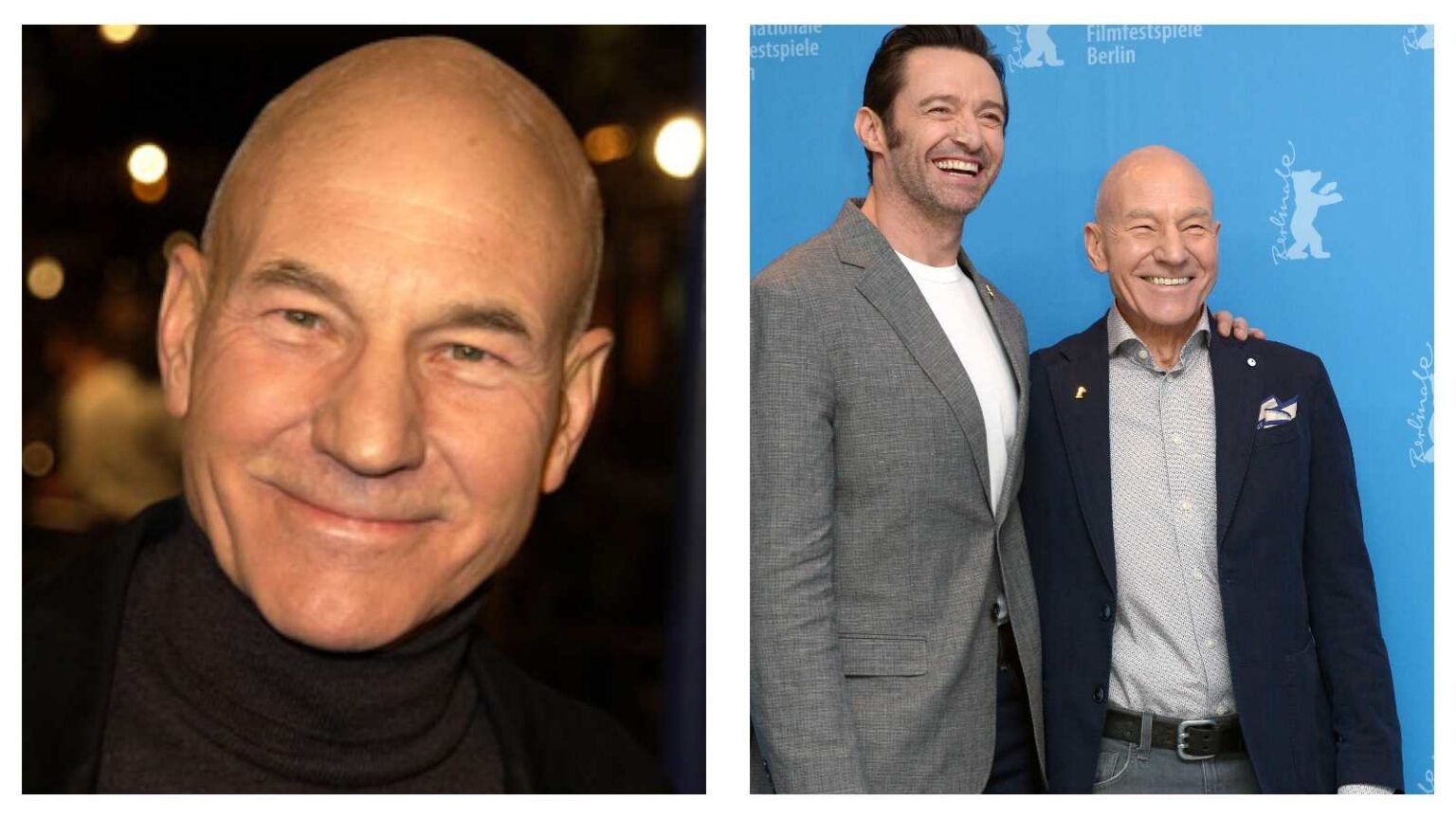
Patrick Stewart, the acclaimed British actor whose iconic performances as Captain Jean-Luc Picard in the “Star Trek” franchise and Professor Charles Xavier in the “X-Men” films made him one of the world’s most recognisable stars, has died at the age of 86.
Stewart died at his home in Los Angeles on Wednesday following a brief battle with Alzheimer’s disease and Lewy body dementia, according to a statement shared on his official social media accounts.
Tributes quickly poured in from colleagues, studios and fans, celebrating his decades-long career across theatre, television and film.
From theatre to screen
A classically trained Shakespearean actor who built his early career on the British stage, Stewart became an unlikely Hollywood icon after taking the role of Jean-Luc Picard in “Star Trek: The Next Generation” in 1987.
He later reached a new generation of fans as Professor Charles Xavier in the X-Men franchise, starting with the first film in 2000, which brought him more accolades and turned him into an iconic figure in pop culture history.
Stewart “wore his heart on his sleeve, which made him a man to rely on, to admire and in my case, love,” his “X-Men” co-actor and friend Ian McKellen said in a report by Agence France-Presse.
“For more than 25 years, he brought a gravitas and profundity to the role, earning fans across the globe,” Marvel Studios said.
Hugh Jackman, his longtime co-star who played Wolverine, paid tribute to Stewart in an Instagram post.
“We lost one of the greats of stage and screen today. And in my book, a tremendous friend and man,” Jackman wrote.
“I learned so much from him. I will miss you, Patrick Stewart, all of my days.”
Role that changed his life
William Shatner, who portrayed Captain Kirk in the “Star Trek: The Original Series,” also expressed heartbreak regarding his death on Instagram.
“Sir Patrick Stewart was a friend, a colleague, and a magnificent actor,” Shatner said.
“From the stage to the bridge of the Enterprise, he brought intelligence, grace, and a deep sense of humanity to everything he did.”
“Captain Picard stood for the best of us, and so did the man who played him. I was filled with affection and admiration for him and his work,” he added.
Stewart had once doubted his role in Star Trek, thinking that the series would not be successful.
But it turned him into a global icon.
“It changed my life. There was nothing in my life that was not affected,” he said in 2023, as reported by CBS News.
“I saw the impact that Star Trek could have on people and their lives, the diversity of the show, its belief in honesty, fair play, equality, all those elements which kind of get a little sketchy these days,” he added.

Learning to laugh
Stewart was once regarded as an incredibly serious actor during his days on Star Trek.
“We had been cast together on Star Trek: The Next Generation and, because of what I’d heard, I was a bit scared, a bit intimidated.”
“And let’s be honest – Patrick was very serious about the work. But there was a concerted effort by the rest of us to beat it out of him,” Actress Marina Sirtis wrote in a tribute article, published by The Guardian.
Stewart had previously recounted this in a 2017 interview on CONAN on TBS.
“I felt that the cast, my fellow cast members in Star Trek, were a little unruly at times, too many jokes, too much fooling around, singing songs,” he recalled.
“We are not here to have fun,” he told his fellow cast back then.
But his castmates, unrelenting, eventually persuaded him to loosen up on set.
It was a lesson he took to heart, ultimately transforming him into the most playful and comedic person during production.
“It was all thanks to my pals in Star Trek who said, ‘Patrick, for heaven’s sake, come on you’ll enjoy the work more if you have fun. A few laughs every day. It’ll go quicker, contrary to what you’re saying.’” Stewart continued.
“And of course, they were right. And we had a great time.”
He then thanked his co-stars in the interview, saying that “they made me live longer.”
“I think maybe I wouldn’t be here if they had not taught me how to laugh more, because I didn’t laugh very much at all,” he said.
Life beyond acting
In The Guardian article, Sirtis also recounted how Stewart had remained her friend long after the Star Trek series ended.
“A month before COVID hit, my husband died. I was on my own in my house in Los Angeles for a year with just my dogs for company. Patrick was one of the very few people who invited me over for lunch, socially distanced in his garden.”
“It had occurred to him that I was grieving and on my own – and he did something about that. It’s a mark of who he is,” she wrote.
“It was the absolute privilege of my life and my career to work with him… He went quickly in the end and it makes me very sad that I didn’t get a chance to say goodbye. To say: “Thank you Patrick. Thanks for everything, mate.”
Born in Mirfield, West Yorkshire, on July 13, 1940, Stewart was the youngest of three boys.
He grew up in a working-class household where he witnessed his father, who was a war veteran likely struggling with Post-Traumatic Stress Disorder, frequently abuse his mother.
The traumatic early years ultimately drove the actor to champion domestic abuse support through the charity Refuge.
Stewart’s journey to the stage began shortly after he left traditional schooling at 15; he went on to train at the Bristol Old Vic Drama School in 1957 and secured his first professional acting role in 1959.
READ NEXT: Filipino EYEKONS excited over KATSEYE’s ‘Wildworld Tour’ in 2027