
Fears are mounting as China’s entertainment industry increasingly embraces AI-generated dramas. Their popularity is also growing across Asia.
China’s short-drama industry produced around 128,000 AI-generated works between January and March 2026 alone, according to the People’s Daily, the official newspaper of the Chinese Communist Party.
Chinese studios also released more than 430,000 micro-dramas in the first eight months of 2026. Reports suggest that AI technologies helped produce 90 per cent of them. This represents a 13-fold increase compared with last year.
The trend shows little sign of slowing. The industry now produces more than 1,500 AI-generated titles every day.
Rise of AI-generated dramas
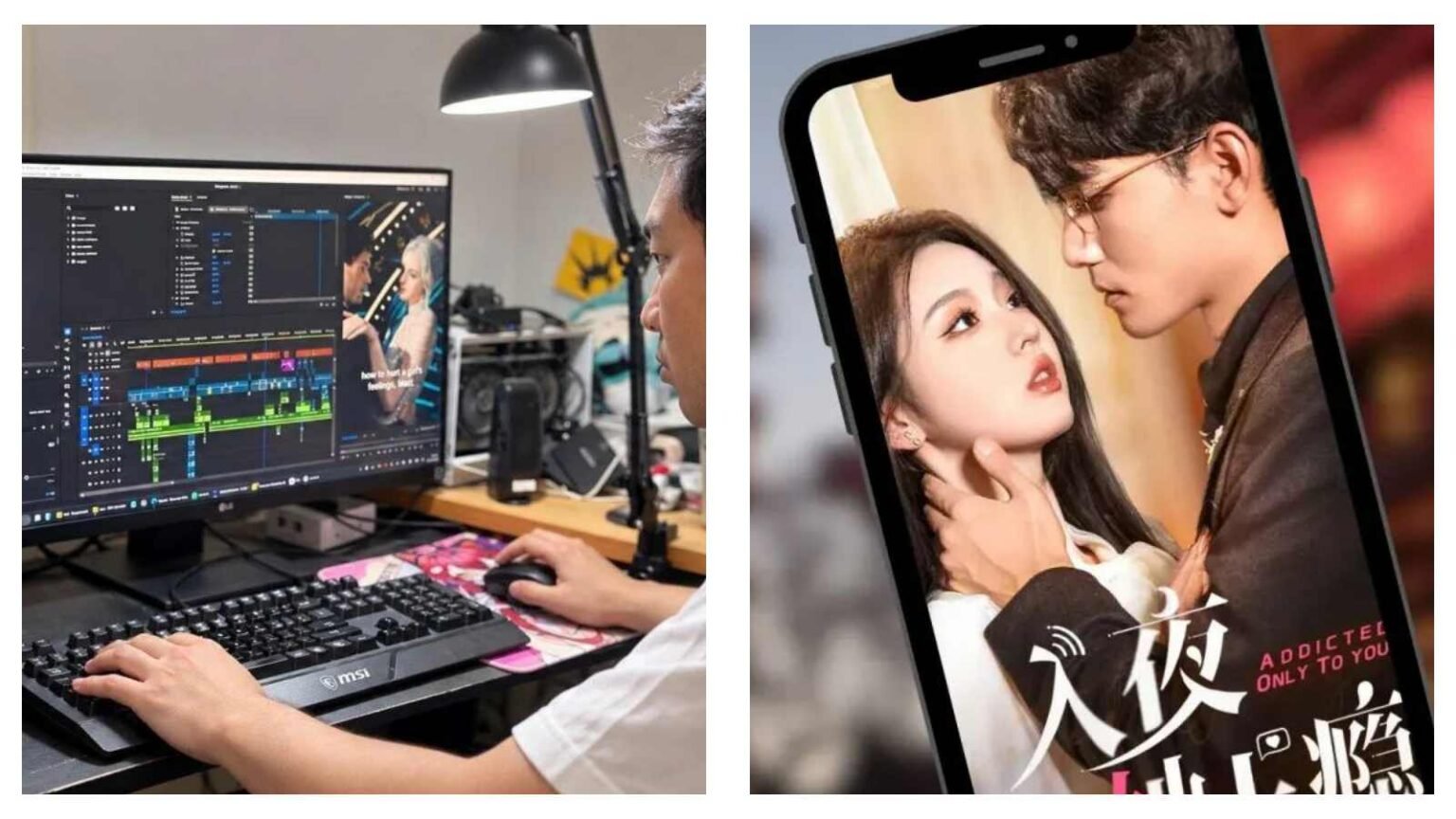
AI-generated short dramas, also known as dwanju, continue to attract audiences across China.
Industry research firm DataEye reported that the number of AI short-drama users in China surpassed 600 million in the first half of 2026.
The firm also found that 1,055 of the 221,900 new AI-generated short dramas released between January and June surpassed 100 million views. This highlights the genre’s growing reach.
Together, these dramas attracted 515.738 billion views during the same period. June alone accounted for 155.78 billion views, the highest monthly figure in the first half of the year.
Meanwhile, China’s AI drama and animation market exceeded RMB22 billion (US$3.29 billion) in the first five months of 2026. Forecasts suggest it could reach RMB40 billion (US$5.98 billion) by the end of the year.

Dwanju gains ground in SEA region
Beyond China, AI-generated dramas are gaining popularity across Southeast Asia, where audiences have embraced short-form content on platforms such as TikTok.
According to “Short Drama Apps in 2026: Macro Landscape, Market Dynamics and Monetisation Principles,” published by the Digital Yield Group, audiences in Indonesia, Thailand and the Philippines spent at least 40 minutes daily watching short-drama apps, surpassing their time spent on traditional streaming platforms.
Ithiel, a 26-year-old Filipino, offers a glimpse into this trend. She said she spends much of her time watching AI-generated dramas on PineDrama, described as TikTok’s official platform for vertical AI-generated dramas.
Her viewing habits reflect the growing appeal of such dramas, which offers audiences convenient, fast-paced stories with a wide range of genres.
Advanced technology, lower costs drive the shift
The boom is being driven by advances in video-generation models, including ByteDance’s Seaweed (Seedance 2.0), as well as efforts to reduce production costs.
Traditional live-action short dramas reportedly cost between RMB300,000 and RMB400,000 at the lower end, while higher-quality productions can cost RMB1 million to RMB1.5 million and take months or even years to complete.
In contrast, an AI-generated drama can cost as little as RMB50,000, including a few thousand yuan for the writer and RMB20,000 to RMB30,000 for production, which could reduce overall costs by 70 to 80 per cent, according to The Low Down.
AI also lowers technical barriers to producing complex scenes, particularly in historical dramas featuring ancient cities, palaces and battlefields.
AI popularity raises employment concerns
Despite lower production costs, AI-generated dramas are raising concerns about the livelihoods of workers across the entertainment industry.
An investigation by Chinese technology publication Leiphone found that only around 0.4% of AI short dramas become major hits, making success difficult for production houses.
Meanwhile, the growing popularity of AI performers has raised concerns about job opportunities for human actors.
Fang Taozi, the AI-generated protagonist of the hit series “The Laid-off Girl,” has gained more than 520,000 social media followers since the drama’s release on Douyin in June, with fans saying they identify with the character, The Japan Times reported.
Li Xiaolong, a young actor and student at the Shanghai Theatre Academy, told Asia News Network that the growing use of AI performers could reduce job opportunities for human actors.
Copyright concerns looms
Beyond their potential impact on actors’ livelihoods, AI performers have raised copyright and image-rights concerns, particularly when they closely resemble real people.
Shanghai-based production company Youhug Media was heavily criticised earlier this year after introducing two AI-generated actors with resemblance with Chinese stars Zhai Zilu and actress Zhao Jinmai and Zhang Zifeng.
Judge Zhao Qi told Channel News Asia that AI-generated actors could still infringe image rights if members of the public could recognise the individuals they resemble, in line with China’s Civil Code.
Similarly, lawyer Li Zhenwu stressed that an AI-generated image may constitute infringement if the public was able to recognise it as a specific even though it was only a “technical coincidence,” adding that it may be considered a crime in serious circumstances.
China pledges more support for human actors
In response to these challenges, China’s National Radio and Television Administration (NTRA) pledged in September to provide direct financial support for live-action productions.
NTRA director general Wang Xiaoliang also said digital platforms would face stricter requirements, including rules requiring AI-generated micro-dramas to be labelled as synthetic content and respect individuals’ image rights.
“AI is a tool. Humans are the creators. The faster AI dramas develop, the more important it is to maintain strong content standards,” he said.
Whether these measures can protect actors and other industry workers remains uncertain as AI-generated dramas and virtual performers continue to gain ground.
READ NEXT: Film news: ‘Bond’ shortlist finalised, fans choose their candidates